
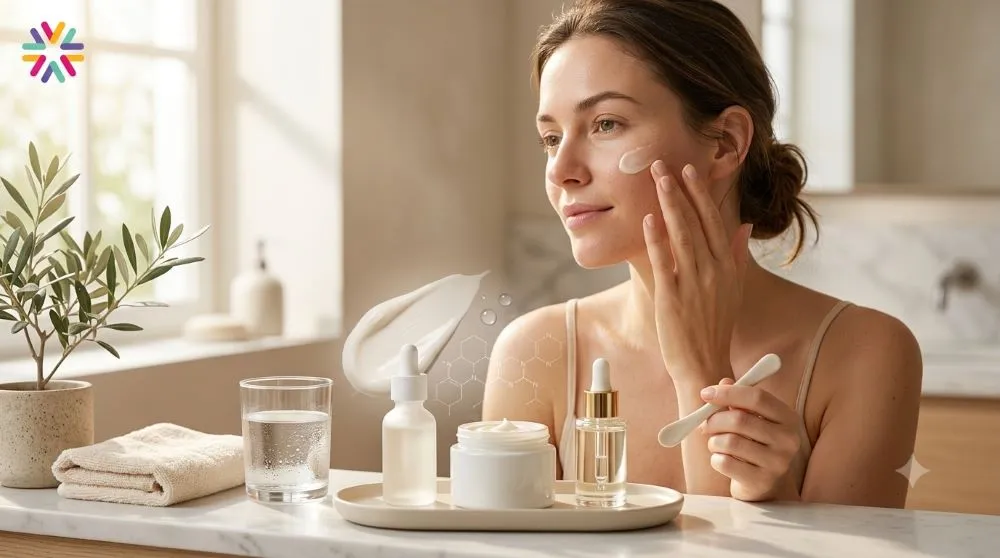
The old beauty rule was simple: stronger meant better.
In 2026, that mindset is losing power. Across the United States, beauty consumers are moving away from harsh exfoliation, overloaded routines, and the “burn means it’s working” myth. The new status symbol is not red, peeling skin. It is calm, resilient, healthy-looking skin that can handle daily life without constant irritation.
That is why skin barrier repair products, ceramides, peptides, microbiome-friendly formulas, and low-irritation routines are becoming the center of modern skincare.
Quick Answer: Why Is Barrier Health Trending in 2026?
- Skin calm is replacing aggressive skincare as consumers become more aware of irritation, over-exfoliation, and barrier damage.
- Skin barrier repair products are trending because they focus on hydration, comfort, resilience, and long-term skin health.
- Ceramides and peptides skincare is gaining attention because these ingredients support barrier function, firmness, and smoother-looking skin without the harsh feel of stronger actives.
- Consumers want fewer steps, better formulas, and routines that work without causing redness, tightness, burning, or peeling.
- Bio-adaptive beauty technology, including L’Oreal bio-adaptive skincare concepts, points toward a future where routines may become more personalized and less trial-and-error.
Skin Barrier Repair Products Are Leading the Skin Calm Beauty Trend 2026
The skin calm beauty trend 2026 is not about doing nothing. It is about doing less damage.
For years, social media made skincare feel like a performance. People layered acids, retinoids, vitamin C, exfoliating toners, acne treatments, clay masks, and peels in the hope of getting faster results. Some routines worked. Many went too far.
The result was a wave of people dealing with tightness, redness, flaking, stinging, sudden sensitivity, and skin that seemed to react to everything. In beauty language, this is often described as a compromised skin barrier.
The skin barrier is the outer protective layer of the skin. Its job is to help keep moisture in and irritants out. When it is healthy, skin usually feels more comfortable, balanced, and resilient. When it is weakened, skin may feel dry, raw, itchy, shiny, inflamed, or unusually sensitive.
This is why barrier care has become so important. Consumers are realizing that glowing skin is not just about exfoliating away texture. It is also about protecting the structure that keeps skin functioning well.
In 2026, the beauty conversation is shifting from “How strong is this active?” to “Can my skin tolerate this routine?”
What Is Happening in Beauty Right Now?
The beauty industry is moving from aggressive transformation to intelligent maintenance. That does not mean active ingredients are disappearing. Retinoids, exfoliating acids, vitamin C, and acne treatments still matter. But they are being used with more care.
The new routine is slower, softer, and more strategic.
Instead of using several strong products at once, many consumers are building routines around a gentle cleanser, barrier-supportive moisturizer, sunscreen, and one or two targeted actives. The goal is not to shock the skin into change. The goal is to support the skin long enough to see steady improvement.
This is why ingredients like ceramides, peptides, glycerin, panthenol, niacinamide, squalane, fatty acids, and cholesterol are becoming popular. They sound less dramatic than a high-strength acid peel, but they fit the mood of the moment: repair, protect, calm, and strengthen.
Beauty brands are responding with richer moisturizers, milky toners, calming serums, microbiome-friendly products, and formulas designed for sensitive skin. Even exfoliation is becoming gentler, with more attention on PHAs, enzymes, and buffered acids instead of daily high-strength treatments.
Why Aggressive Actives Are Losing Their Shine
Aggressive actives became popular because they often produce visible results. Exfoliating acids can smooth texture. Retinoids can improve signs of aging and acne. Brightening products can help uneven tone. These ingredients are not the enemy.
The problem is misuse.
Many people copied advanced routines without understanding skin tolerance. They used too many active products too often, mixed ingredients that were difficult to tolerate together, skipped moisturizer, or forgot daily sunscreen. Some also confused irritation with progress.
In reality, burning, persistent stinging, severe peeling, and constant redness are not signs that a routine is automatically working. They may be signs that the skin needs a pause.
That is why the “death of aggressive actives” does not mean actives are dead. It means the old attitude around them is fading. Skincare is becoming less about maximum strength and more about smart dosing.
In 2026, the most modern routine is not the harshest one. It is the one your skin can actually live with.
Why It Matters Right Now for U.S. Beauty Consumers
For United States readers, the shift toward barrier health is especially relevant because beauty shopping has become overwhelming.
Drugstores, Sephora aisles, TikTok shops, dermatologist brands, celebrity lines, K-beauty launches, and influencer recommendations all compete for attention. Consumers are surrounded by products promising glass skin, poreless skin, lifted skin, bright skin, filtered skin, and overnight transformation.
That pressure can lead to overbuying and overusing. A person may not need another active serum. They may need a simpler routine, better sunscreen habits, and a moisturizer that supports the skin barrier.
There is also a financial angle. Barrier damage can make people feel like they need more products to fix the irritation caused by the products they already bought. A calm, basic routine can be more affordable and more effective than constantly chasing new launches.
For beauty brands, the trend creates a new business reality. Products must now feel effective without feeling punishing. Consumers want proof, comfort, and trust. They are reading ingredient lists, listening to dermatologists, and asking whether a product supports long-term skin health.
For social media, this shift matters too. The most influential skincare content is becoming less about dramatic “before and after” peeling routines and more about education, repair, and realistic skin texture.
Comparison: Aggressive Active Routine vs. Skin Calm Routine
| Category | Aggressive Active Routine | Skin Calm Barrier Routine | What It Means for Consumers |
|---|---|---|---|
| Main goal | Fast visible change | Steady skin health and resilience | Results may come slower, but irritation risk may be lower |
| Common products | Strong acids, retinoids, peels, multiple treatment serums | Gentle cleanser, moisturizer, sunscreen, ceramides, peptides, calming ingredients | Routine becomes easier to follow and less reactive |
| Typical risk | Redness, peeling, burning, sensitivity, barrier stress | May feel less dramatic at first | Patience becomes part of the routine |
| Best for | Experienced users with strong tolerance and clear goals | Sensitive, dry, irritated, beginner, or over-treated skin | Most people benefit from barrier support before stronger treatments |
| 2026 appeal | Still useful, but no longer the default ideal | Modern, practical, and dermatologist-aligned | Beauty is moving toward repair-first routines |
Ceramides and Peptides Skincare: Why These Ingredients Matter
Ceramides and peptides skincare is one of the clearest examples of the 2026 beauty shift.
Ceramides are lipids naturally found in the skin barrier. In simple terms, they help fill the spaces between skin cells so the barrier can hold moisture and defend against outside stress. When skincare products include ceramides, they are often designed to support dryness, sensitivity, and barrier comfort.
Peptides work differently. They are short chains of amino acids often used in formulas that target firmness, smoothness, and signs of aging. Modern peptide products are gaining attention because they can fit into a more calming routine without the same harsh reputation as some stronger actives.
Neither ingredient is magic. A ceramide cream will not erase every skin concern overnight. A peptide serum will not replace every treatment. But together, they reflect a smarter beauty philosophy: support the skin while improving it.
This is why consumers are drawn to formulas that combine hydration, barrier repair, and gentle performance. They want skincare that feels elegant, not aggressive.
How to Heal Compromised Skin Barrier Without Overcomplicating It
If your skin feels tight, hot, raw, flaky, itchy, or suddenly reactive, your routine may need a reset. Learning how to heal compromised skin barrier starts with removing the pressure to do too much.
For most people, a barrier reset means going back to basics for a short period.
Start with a gentle, non-stripping cleanser. Avoid scrubs, strong exfoliating acids, and harsh cleansing brushes while the skin feels irritated. Use lukewarm water instead of hot water.
Next, apply a moisturizer that focuses on barrier support. Look for ingredients such as ceramides, glycerin, panthenol, squalane, fatty acids, niacinamide, or colloidal oatmeal. The exact product matters less than the formula being gentle, comfortable, and non-irritating for your skin.
During the day, use broad-spectrum sunscreen. A compromised barrier can feel more sensitive to environmental stress, and sunscreen remains one of the most important daily skincare steps.
Most importantly, pause strong actives until your skin feels calm again. This may include retinoids, exfoliating acids, benzoyl peroxide, strong vitamin C formulas, or at-home peels. Once your skin improves, reintroduce active products slowly, one at a time.
If irritation is severe, painful, spreading, or does not improve, see a board-certified dermatologist. Not every skin issue is simple barrier damage. Conditions like eczema, rosacea, allergic contact dermatitis, acne, and infection may need professional care.
L’Oreal Bio-Adaptive Skincare and the Future of Personalized Beauty
The phrase L’Oreal bio-adaptive skincare reflects a larger direction in beauty: products and tools that respond more intelligently to the person using them.
L’Oréal’s Cell BioPrint, introduced as a skin analysis technology, shows where the industry is heading. Instead of relying only on guesswork, brands are exploring ways to understand skin biology, aging patterns, ingredient response, and personal needs more precisely.
This matters because one of the biggest problems in skincare is trial and error. A product that works beautifully for one person may irritate another. A strong active may be helpful for oily, resilient skin but too much for sensitive or compromised skin.
The future may bring more diagnostic tools, AI-assisted routines, and formulas that adapt to changing skin conditions. That could make skincare less wasteful and less frustrating.
But technology should not replace common sense. Personalized skincare still needs the basics: gentle cleansing, daily sunscreen, hydration, barrier support, and realistic expectations.
“RankAshva editorial view is that the most luxurious skin of 2026 is not aggressively perfected—it is composed, protected, and intelligently cared for, with calm becoming the new glow.”
Risks, Concerns, and Opposing Views
The skin calm movement is useful, but it can also be misunderstood.
One risk is that people may become afraid of all active ingredients. That is not necessary. Retinoids, acids, and brightening ingredients can be effective when used correctly. The problem is not the active itself. The problem is overuse, poor pairing, and ignoring irritation signals.
Another concern is marketing. As barrier care becomes popular, more brands will use terms like “barrier repair,” “skin calm,” “microbiome-friendly,” and “clinical” without always explaining what the product actually does. Consumers should look beyond buzzwords and read the ingredient list.
There is also the risk of expecting too much from moisturizers. Barrier-supportive products can help comfort and protect the skin, but they may not treat every concern. Acne, hyperpigmentation, rosacea, eczema, and persistent inflammation may need targeted treatment.
A balanced routine is best. Calm does not mean passive. It means strategic.
What Readers Should Do Now
If your current routine is working and your skin feels comfortable, you do not need to throw everything away. The skin calm trend is not about panic. It is about awareness.
Start by reviewing your routine. Count how many active treatment products you use in a week. If you are using multiple exfoliants, retinoids, acne treatments, and brightening serums at the same time, consider simplifying.
Next, identify your barrier basics. You should have a gentle cleanser, a dependable moisturizer, and sunscreen you actually use every day. These are not boring steps. They are the foundation.
Then, choose one main treatment goal at a time. If you are targeting acne, aging, or dark spots, build around that goal instead of adding every trending product at once.
Finally, listen to your skin. Mild adjustment can happen with some actives, but ongoing burning, painful stinging, rawness, or sudden sensitivity is a sign to pause and reassess.
Future Outlook: What Comes After Skin Calm?
The future of beauty will likely combine calm routines with smarter technology.
Expect more formulas that pair active ingredients with soothing support. Retinoids may come buffered with barrier ingredients. Exfoliating toners may become creamier, gentler, and more hydrating. Peptides may appear in more products designed for sensitive skin. Moisturizers may become more advanced without feeling heavy.
Personalized skincare tools may also become more common. Instead of choosing products based only on trends, consumers may increasingly rely on skin analysis, diagnostic devices, and smarter retail experiences.
The biggest prediction is that beauty will continue moving away from punishment. The next generation of skincare will focus on results that do not require constant irritation.
In other words, the future is not active-free. It is barrier-aware.
FAQ: Skin Barrier Repair Products and Skin Calm Beauty
What are skin barrier repair products?
Skin barrier repair products are skincare formulas designed to support the skin’s outer protective layer. They often include ingredients such as ceramides, glycerin, panthenol, fatty acids, squalane, niacinamide, and soothing moisturizers.
How do I know if my skin barrier is compromised?
Common signs may include tightness, dryness, burning, stinging, flaking, redness, itchiness, or sudden sensitivity to products that previously worked well. If symptoms are severe or persistent, consult a dermatologist.
Are ceramides and peptides good for sensitive skin?
Ceramides are commonly used to support barrier function and moisture retention. Peptides may help support smoother, firmer-looking skin. Many sensitive-skin routines include these ingredients, but tolerance depends on the full formula.
Should I stop using retinol or exfoliating acids?
Not always. If your skin tolerates them well, they can remain useful. If your skin is irritated, burning, peeling heavily, or reactive, it may be smart to pause strong actives and focus on barrier repair before reintroducing them slowly.
What is the simplest skin calm routine?
A simple skin calm routine includes a gentle cleanser, barrier-supportive moisturizer, daily sunscreen, and one carefully chosen treatment product only when the skin is calm enough to tolerate it.
Conclusion
The death of aggressive actives is not really the death of active skincare. It is the end of the idea that skin must suffer to improve.
In 2026, beauty is becoming more thoughtful. Skin barrier repair products, ceramides, peptides, soothing formulas, and personalized technology are changing what consumers expect from skincare. The new goal is not just glow. It is resilience.
The key takeaway is simple: calm skin is not a trend because people stopped caring about results. It is a trend because people finally understand that healthy-looking skin starts with a barrier that feels safe, strong, and supported.




More Stories
Pool-Proof Summer Beauty: Makeup That Actually Survives the ‘Take Her Swimming’ Trend
Summer 2026 Beauty Trends: How to Master Skinimalism and the Perfect Glazed Skin
2026 Beauty Trends Explained: The Foundation in Water Hack, Brat Beauty, and the New Skin Rules