
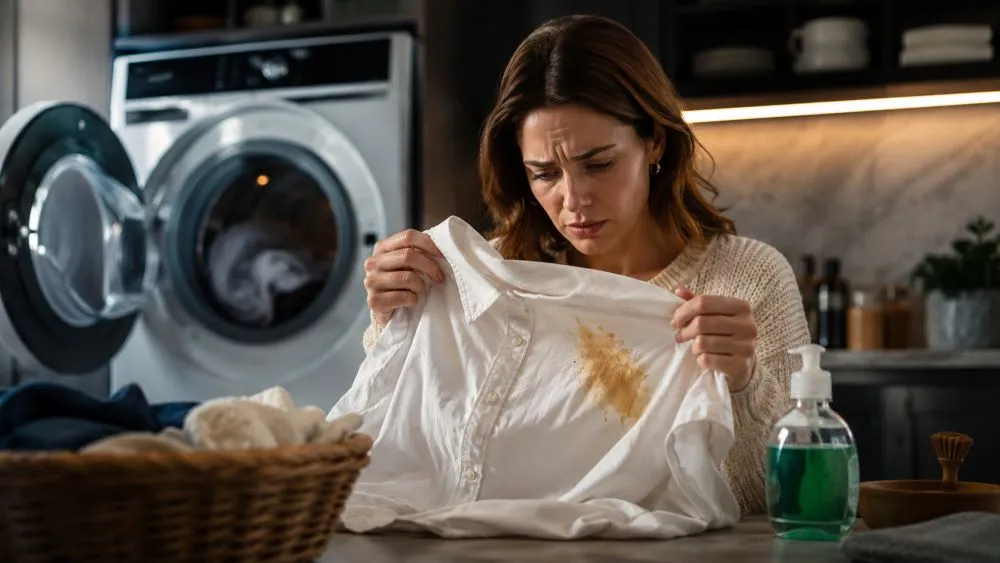
You pulled your favorite shirt from the dryer, held it up to the light, and there it was: a dark little grease shadow that somehow survived the wash.
Worse, the dryer got involved. Now that cooking oil stain feels baked into the fabric, and the panic is real because the garment was not cheap.
The good news? A washed-and-dried grease stain is harder to remove, but it is not always a lost cause. If you are searching for how to get grease stains out of clothes after washing, the real trick is using the right surfactant, patience, and absolutely no more dryer heat until the stain is gone.
Table of Contents
- Quick Answer
- Why Grease Stains Survive the Wash
- Why This Laundry Hack Is Trending Right Now
- The Simple Science Behind Set-In Oil Stains
- Grease Stain Removal Methods Compared
- Risks, Concerns, and What Not to Do
- What You Should Do Step by Step
- Future Outlook
- FAQ
- Final Takeaway
Quick Answer: How to Get Grease Stains Out of Clothes After Washing
- Do not put the clothing back in the dryer. Heat can make oily stains much harder to remove.
- Use a grease-cutting surfactant. A small amount of liquid dish soap can help break up oil on washable fabrics.
- Work from the back of the stain when possible. This helps push the oil out instead of deeper into the fibers.
- Let the treatment sit. Set-in grease needs more contact time than a fresh splatter.
- Air dry and inspect. Repeat the process before using heat again.
Why Grease Stains Survive the Wash
Grease stains are sneaky because they do not always look dramatic right away. A drop of olive oil, butter, salad dressing, pizza grease, bacon fat, or fryer oil can blend into fabric while the clothing is wet.
Then the dryer reveals the truth. Once the fabric is dry, the stain looks darker, shinier, or slightly translucent.
Regular laundry detergent can remove plenty of everyday soil, but oil behaves differently from coffee, dirt, or sweat. Oil does not dissolve in water, so it needs help from cleaning agents that can surround and lift greasy molecules away from the fabric.
That is why people reach for dish soap. Products designed to clean pans and plates are made to cut cooking grease, which is exactly the type of residue many clothing stains contain.
This is also why the phrase Dawn dish soap grease stain keeps popping up in laundry forums, cleaning videos, and home-care blogs. People are not just trying to clean clothes. They are trying to rescue money, confidence, and a favorite piece they thought was ruined.
Why “How to Get Grease Stains Out of Clothes After Washing” Is Trending
This topic is having a moment because it hits a very specific modern problem: clothes are expensive, people cook more at home, and social media has made “laundry rescue” content weirdly addictive.
A grease stain does not feel like a small mess when it lands on a $90 hoodie, a work blouse, a linen dress, or the one T-shirt that fits perfectly. The financial sting is real.
There is also the emotional side. Nobody wants to feel careless because one invisible oil spot slipped through laundry day.
Search interest around removing set-in stains tends to spike because people usually look for help only after the mistake has happened. They do not search before washing. They search after the garment has already been through detergent, hot water, and tumble drying.
That timing matters. Once heat enters the picture, the stain may bond more tightly to the fabric. That does not always mean permanent, but it does mean you need a more focused plan.
“At RankAshva, we see stain rescue as more than a cleaning trick; it is a practical way to protect the clothes people actually live in, love, and cannot always afford to replace.”
The Simple Science Behind Set-In Oil Stains
Let’s keep the chemistry simple. Grease is lipid-based, which means it is oily, slick, and resistant to plain water.
Water wants to rinse away water-soluble messes. Grease does not play along.
Surfactants are the useful part. They have one side that likes water and another side that grabs oil. When used correctly, they help break the grease into tiny droplets so it can rinse away.
That process is called emulsifying. You do not need to remember the word, but you do need to understand the idea: dish soap helps make oil removable.
Dryer heat makes things harder because it can push oily residue deeper into fibers. Some cooking oils can also oxidize over time, leaving a darker, stubborn mark that feels almost painted onto the cloth.
This is why a fresh oil stain is usually easier to treat than an old one. But set-in does not always mean finished.
Grease Stain Removal Methods Compared
| Method | Best For | Main Benefit | Watch Out For |
|---|---|---|---|
| Liquid dish soap | Cooking oil, butter, salad dressing, food grease | Cuts grease and helps emulsify oil | Too much can create excess suds in a washer |
| Heavy-duty laundry detergent | General oily stains on washable fabrics | Made for fabric and machine washing | May need repeat treatments for old stains |
| Baking soda or cornstarch | Fresh or slightly oily residue | Absorbs surface oil before washing | Less powerful once the stain has been dried |
| Murphy Oil Soap | Some stubborn greasy marks as a spot test option | Popular home hack for grease loosening | Not primarily a laundry product, so test first |
| Dry cleaner | Silk, wool, structured garments, expensive pieces | Professional solvents and fabric knowledge | Costs more, and success is not guaranteed |
Risks, Concerns, and Opposing Views
Not every internet laundry hack deserves your trust. Some methods can damage fabric, fade dye, or leave residue that creates a new problem.
Dish soap is useful, but it should be used as a spot treatment, not poured into the washing machine like laundry detergent. A small amount goes a long way.
There is also debate around products like Murphy Oil Soap for laundry. Some people swear by it for greasy stains, and the phrase Murphy Oil soap laundry has become part of the home-hack conversation.
Still, it was not created mainly as a clothing detergent. If you try it, test a hidden seam first and avoid using it on delicate, dry-clean-only, vintage, embellished, or unstable fabrics.
Another concern is aggressive scrubbing. It feels satisfying, but it can rough up fibers and create a worn-looking patch around the stain.
Bleach is not the answer for grease either. Chlorine bleach may lighten color, weaken fibers, or fail to remove the oily part of the stain. Oxygen bleach can help with some leftover discoloration, but it is not the main grease cutter.
The biggest mistake is simple: drying too soon. If the spot remains after treatment and washing, air dry only. The dryer should be treated like the final boss, not part of the cleaning process.
What Readers Should Do: A Beginner-Friendly Rescue Plan
Start by checking the care label. If the garment says dry clean only, stop and consider a professional cleaner, especially if the item is expensive.
If the fabric is washable, lay it flat on a towel. Place a piece of cardboard or an old white cloth behind the stain so the oil does not transfer to another layer.
Next, apply a tiny amount of liquid dish soap directly to the grease mark. You want enough to cover the stain, not enough to foam like a sink full of dishes.
Use your fingers or a soft toothbrush to gently work the soap into the fibers. Move slowly. The goal is to loosen the oil, not punish the shirt.
Let it sit for 10 to 30 minutes. For a stubborn, dryer-set stain, longer contact time can help, but do not let soap dry into delicate fabric for hours without checking it.
Rinse from the back of the fabric using warm water if the care label allows it. This helps push loosened oil out instead of driving it deeper.
Then wash the garment with a good laundry detergent on the warmest safe setting listed on the label. Warm water can help with grease, but fabric rules still matter.
After washing, inspect the spot in bright natural light. Do not rely on a dim laundry room.
If the stain is still there, repeat the dish soap treatment. Set-in oil often needs two or three rounds.
To remove set in oil stains from thicker cotton, denim, or sturdy blends, you can also sprinkle baking soda over the treated area after adding dish soap. Let it sit briefly, then gently brush and wash.
For people trying to get old cooking oil out of clothes, patience is the real hack. Old stains may fade gradually rather than vanish in one dramatic wash.
If the garment is valuable and the stain does not budge after careful home treatment, take it to a cleaner and tell them exactly what caused the stain and what you already used. That information helps.
Future Outlook: Why Laundry Rescue Content Will Keep Growing
Laundry hacks are not going away. If anything, they are getting more popular because people want to make their clothes last longer.
Inflation, sustainability, capsule wardrobes, resale fashion, and higher clothing costs all push people toward repair instead of replacement.
Expect more interest in targeted stain treatments, enzyme detergents, refillable cleaning products, and fabric-safe formulas made for specific messes.
We will also see more side-by-side cleaning tests online. That is helpful when done carefully, but it can be misleading when creators skip fabric type, water temperature, contact time, or whether the garment was already dried.
The best future laundry habit is not flashy. It is checking clothes before they hit the dryer.
That one pause can save a lot of stress.
FAQ
Can you really get grease stains out of clothes after washing and drying?
Yes, sometimes. Dryer heat makes grease stains more stubborn, but many washable fabrics can still be rescued with dish soap, detergent, warm water, and repeat treatments.
Is Dawn dish soap safe for grease stains on clothes?
Dawn dish soap is widely used as a spot treatment for greasy food stains because it is designed to cut oil. Use only a small amount, rinse well, and test first on delicate or dark fabrics.
How many times should I treat a set-in grease stain?
Two or three careful rounds are common for old oil stains. If the stain does not improve at all, stop before damaging the fabric and consider a professional cleaner.
Can Murphy Oil Soap remove grease stains from clothing?
Some people use Murphy Oil Soap as a home remedy for greasy clothing stains, but it is not mainly sold as a laundry detergent. Test it on a hidden area first and avoid delicate fabrics.
What should I never do with a grease-stained garment?
Do not put it back in the dryer until the stain is completely gone. Also avoid harsh scrubbing, random solvents, and bleach unless the care label and fabric type clearly support it.
Final Takeaway
A dryer-set grease stain feels like a tiny laundry disaster, but it is not always the end of the garment.
The smartest move is to slow down, use a grease-cutting surfactant, wash carefully, and air dry until you know the stain is gone.
If you remember one thing, remember this: grease needs targeted treatment, not panic. As a practical editorial opinion from RankAshva, the best clothing hack is not buying more; it is learning how to save what you already own.



More Stories
100 Non-Negotiable Rules for Men
Restoring Clarity: How to Clean Oven Glass With Baking Soda Without Harsh Chemical Sprays
Revive Your Linens: How to Eradicate the Musty Mildew Smell from Bath Towels