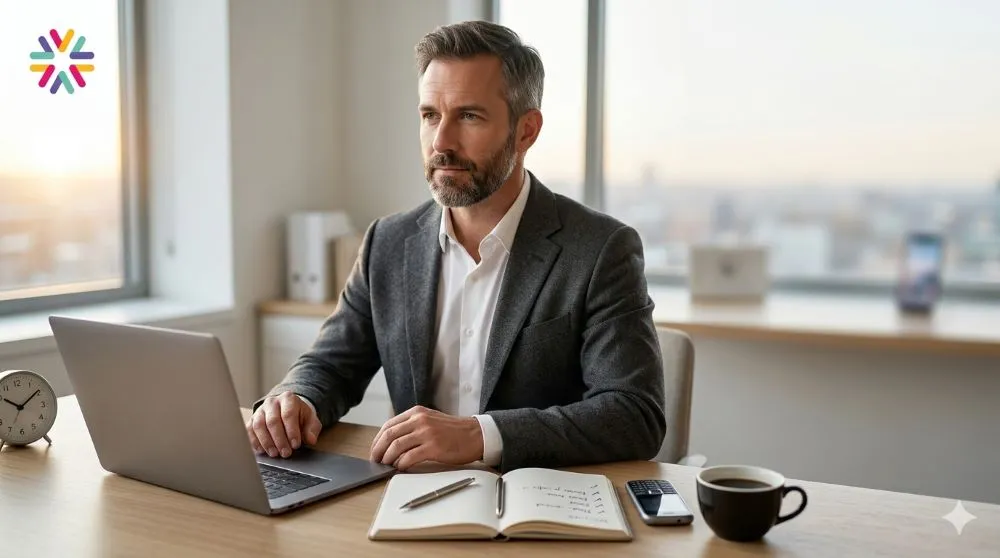
The newest status symbol among busy professionals is not a brighter screen, a faster app, or another productivity dashboard. It is a quieter phone.
Across the United States, high-performers are rethinking their relationship with smartphones. The goal is not to reject technology. The goal is to stop letting technology manage attention, energy, and the first hour of the day.
Quick Answer: What Is the Dumb Phone Executive Trend?
- The dumb phone trend is the move toward simpler phones, fewer apps, and less constant screen access.
- Executives and high-performers are using limited phones, app blockers, phone-free mornings, and voice-first tools to protect focus.
- The first hour no-phone habit is becoming a practical productivity rule for reducing stress and starting the day with intention.
- Precision productivity means using the right tool at the right time instead of staying connected to everything all day.
- Wispr Flow voice-first workflows show where productivity is heading: less typing, less scrolling, and more intentional input.
Why the Dumb Phone Trend Is Becoming a 2026 Productivity Hack
The dumb phone trend is not just nostalgia for flip phones. It is a reaction to a real problem: smartphones have become too useful, too available, and too distracting.
For years, the productivity conversation focused on better apps. Calendar apps, note apps, project management apps, habit trackers, sleep trackers, finance apps, email apps, and messaging apps all promised to make life easier. But many people now feel buried under the tools that were supposed to help them.
In 2026, a new idea is gaining momentum: productivity is not about having more access. It is about having better boundaries.
That is why the “dumb phone” has moved from a niche digital detox object to a serious life hack for professionals. Some people are switching to basic phones full-time. Others are using a second simple phone on weekends, during deep work blocks, or while traveling. Many are not switching devices at all, but are making their smartphone behave more like a dumb phone by removing social apps, disabling notifications, using grayscale mode, and keeping the device out of the bedroom.
The executive version of the trend is more strategic. It is not about disappearing. It is about designing a communication system that supports clear thinking.
What Is Actually Happening?
Three trends are converging at the same time.
First, Americans are more connected than ever. Smartphones, social platforms, messaging tools, and mobile internet are now deeply woven into daily life. For many workers, the phone is not a device anymore; it is a portable office, entertainment center, shopping mall, news feed, and social identity hub.
Second, people are becoming more aware of the cost of constant access. The first few minutes after waking up can quickly become a flood of emails, headlines, alerts, group chats, and algorithmic content. That can make the day feel urgent before it is even organized.
Third, AI is changing the meaning of productivity. Tools like Wispr Flow voice-first dictation suggest a future where professionals do not need to stare at a screen to capture ideas, write notes, draft messages, or move work forward. The smartest workflow may not be more screen time. It may be better input with less visual distraction.
This is why the dumb phone trend is bigger than phones. It is part of a larger shift toward intentional technology.
Why High-Performers Are Interested
High-performers are not avoiding smartphones because they hate technology. They are doing it because attention has become expensive.
A founder, executive, consultant, lawyer, creator, manager, or sales leader may not lose the day in one big distraction. The bigger problem is micro-distraction. A notification here. A quick scroll there. A message check between tasks. A glance at the phone during a meeting. A short video before bed that becomes 40 minutes.
Each interruption seems small. Together, they weaken the ability to think deeply.
The dumb phone executive trend is built around a simple belief: the most valuable work often happens when the mind has room to connect ideas without interruption.
That belief explains why “first hour no-phone” routines are spreading. The first hour of the morning is becoming protected time for planning, movement, reading, journaling, family, prayer, meditation, or focused work. Instead of letting the phone decide the emotional tone of the day, people are choosing to set the tone themselves.
Why It Matters Right Now in the United States
The United States is a high-connectivity culture. Work communication is fast. Consumer apps are sophisticated. Social media is deeply embedded in business, entertainment, politics, and personal branding. For many Americans, being reachable feels responsible.
But there is a difference between being reachable and being constantly interruptible.
This matters for workers because attention is now a career advantage. People who can think clearly, write well, make decisions calmly, and stay focused through complexity have an edge.
It matters for businesses because notification overload can reduce the quality of work. Meetings become less useful when everyone is half-present. Strategy suffers when leaders are reacting all day. Teams can become busy without becoming effective.
It also matters socially. Many people are tired of feeling physically present but mentally pulled into a screen. The rise of phone-free dinners, digital detox weekends, and simplified devices reflects a growing desire for real-world presence.
Comparison: Four Modern Productivity Styles in 2026
| Productivity Style | How It Works | Main Benefit | Main Risk | Best For |
|---|---|---|---|---|
| Always-On Smartphone | All apps, alerts, messages, and feeds remain available throughout the day. | Maximum convenience and fast response time. | Constant distraction, stress, and shallow focus. | Roles that require urgent communication. |
| Dumb Phone Setup | Calls, texts, maps, and essentials are separated from addictive apps. | Better attention and fewer impulse checks. | Can feel inconvenient in app-based situations. | Deep work, weekends, travel, and digital detox routines. |
| First Hour No-Phone | The phone stays away for the first 60 minutes after waking. | Cleaner mornings, better planning, and more intentional energy. | Requires discipline and backup systems for urgent needs. | Beginners who want a low-cost productivity reset. |
| Voice-First Workflow | Tools like Wispr Flow voice-first dictation reduce typing and screen dependence. | Faster idea capture and less visual friction. | Privacy, accuracy, and social comfort may vary by environment. | Executives, writers, founders, and knowledge workers. |
The Rise of Precision Productivity
Precision productivity is the opposite of digital overload. It means choosing tools with a specific purpose instead of letting every tool into every moment.
A smartphone is excellent for navigation, emergency contact, quick photos, banking, travel, and authentication. But it is often poor for uninterrupted thinking. A laptop is excellent for complex work, but poor for rest. A voice tool can be excellent for capturing thoughts, but not ideal for confidential conversations in public.
Precision productivity asks one question: “What tool should own this moment?”
That question changes everything. Morning planning may belong to paper. Deep work may belong to a laptop with the phone in another room. Quick idea capture may belong to voice dictation. Personal time may belong to a dumb phone with only calls and texts.
This is the real life hack. The device is not the point. The boundary is the point.
Risks, Concerns, and Opposing Views
The dumb phone trend is useful, but it is not perfect.
Some people need smartphones for work, caregiving, accessibility, transportation, health apps, two-factor authentication, banking, or family coordination. For them, switching to a basic phone may create more stress, not less.
There is also a privilege issue. A senior executive may be able to delegate urgent messages or set strict communication boundaries. A retail worker, contractor, parent, or gig worker may not have the same freedom.
Another concern is that the dumb phone trend can become performative. Buying a minimalist device does not automatically create discipline. A person can remove social media from one phone and still waste hours on a laptop. The real challenge is behavioral, not just technical.
Voice-first tools also come with trade-offs. Dictation can be powerful, but people should think carefully about privacy, workplace rules, confidential information, and where it is appropriate to speak instead of type.
The balanced view is simple: do not copy the trend blindly. Use the parts that solve your actual problem.
What Readers Should Do: A Beginner-Friendly Plan
You do not need to buy a new phone tomorrow. Start with a simple seven-day experiment.
1. Create a First Hour No-Phone Rule
Charge your phone outside the bedroom or place it across the room. Use a separate alarm clock if needed. For the first 60 minutes, avoid messages, news, email, and social media.
Use that time for something that makes the rest of the day easier: walking, stretching, planning, reading, journaling, preparing breakfast, or reviewing your top three priorities.
2. Remove the Most Addictive Apps From Your Home Screen
You do not have to delete everything. Start by moving social media, video, shopping, and news apps off the home screen. Add friction. Make the habit less automatic.
3. Turn Off Non-Essential Notifications
Keep alerts for calls, direct family messages, calendar reminders, banking security, and true emergencies. Turn off the rest. Most notifications are not information. They are invitations to stop thinking.
4. Build a Dumb Phone Mode
Use focus settings, app limits, grayscale mode, or a minimalist launcher to make your smartphone less stimulating. Your goal is to keep the useful parts and weaken the compulsive parts.
5. Try Voice-First Capture
If typing slows you down, test a voice-first workflow. Dictate rough thoughts, meeting notes, outlines, or message drafts. Tools like Wispr Flow can help turn spoken ideas into cleaner text across apps, but the habit matters more than the brand.
6. Set Communication Windows
Instead of checking messages all day, create windows. For example: 9:30 a.m., 12:30 p.m., 3:30 p.m., and 5:30 p.m. This protects focus while keeping you responsive.
Future Outlook: What Happens Next?
The dumb phone trend will probably not replace smartphones. Instead, it will reshape how people use them.
Expect more hybrid devices that include maps, rideshare, music, payments, authentication, and messaging without endless feeds. Expect more professionals to carry secondary phones for specific contexts. Expect companies to create stronger norms around notification hygiene, meeting presence, and after-hours boundaries.
AI will also accelerate the shift. As voice-first tools improve, more work will happen through speech, summaries, and intentional commands rather than constant tapping and scrolling. The future of productivity may feel less like living inside apps and more like directing systems from a distance.
The biggest winners will not be the people who abandon technology. They will be the people who use technology with taste, timing, and restraint.
“RankAshva sees the dumb phone executive trend as a quiet luxury of attention: not a retreat from ambition, but a sharper way to protect the mental space where better decisions are made.”
FAQ: Dumb Phone Trend and 2026 Productivity Hacks
What is the dumb phone trend?
The dumb phone trend is the growing interest in simpler phones or simplified smartphone setups that reduce access to social media, notifications, and addictive apps. The goal is to improve focus, presence, and mental clarity.
Do I need to buy a dumb phone to benefit from this trend?
No. Many people get the same benefit by removing distracting apps, turning off notifications, using focus modes, and keeping their smartphone away during mornings, meals, meetings, and deep work sessions.
Why is the first hour no-phone habit popular?
The first hour no-phone habit helps people begin the day without immediately reacting to alerts, emails, news, or social media. It supports a calmer morning and makes it easier to set priorities before outside demands take over.
What is precision productivity?
Precision productivity means matching the right tool to the right moment. Instead of using one smartphone for everything, you choose when to use a phone, laptop, notebook, voice tool, or no device at all.
How does Wispr Flow voice-first productivity fit into this trend?
Wispr Flow voice-first productivity fits the trend because it helps people capture and write ideas by speaking instead of typing. For some professionals, this can reduce screen friction and make digital work feel more intentional.
Conclusion: The Smartest Phone Habit May Be Using It Less
The “dumb phone” executive trend is not really about dumb phones. It is about smart boundaries.
In 2026, the best productivity hacks are becoming simpler: protect the first hour, reduce notifications, separate deep work from distraction, and use voice-first tools when they help you move faster without pulling you into another screen.
For high-performers, the message is clear. You do not need to be less connected forever. You need to be less available to distractions that do not deserve your attention.
The future of productivity belongs to people who can choose when to connect, when to create, and when to be unreachable long enough to think.




More Stories
100 Non-Negotiable Rules for Men
Salvaging Wardrobes: The Definitive Guide to Removing Set-In Grease Stains After Washing
Restoring Clarity: How to Clean Oven Glass With Baking Soda Without Harsh Chemical Sprays