
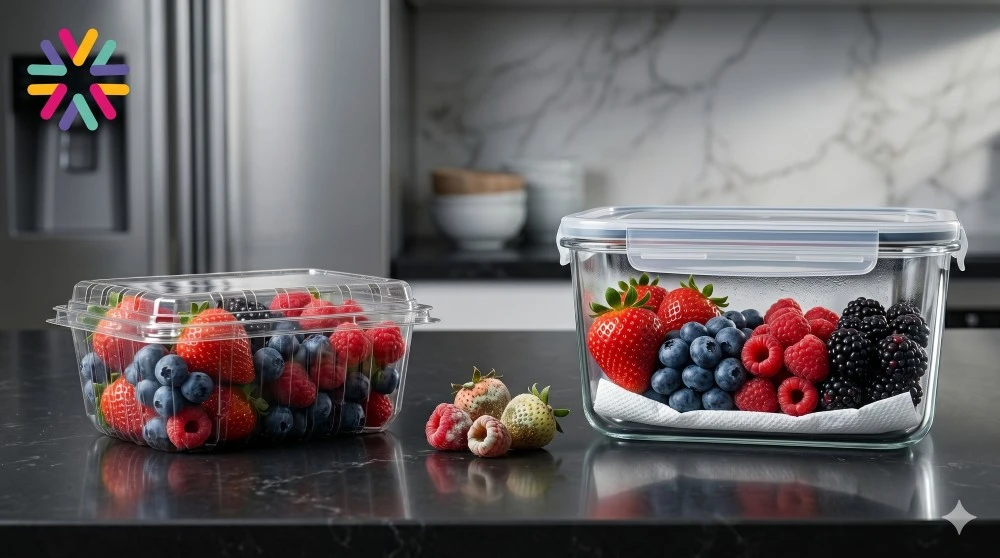
You buy a beautiful pack of strawberries, blueberries, blackberries, or raspberries. They look perfect in the store, bright and fresh and ready for breakfast.
Then two days later, you open the fridge and find one fuzzy berry sitting in the corner like it had a plan all along.
If that keeps happening, you are not alone. Fresh berries are expensive, delicate, and frustratingly quick to spoil. The good news is that a few smart storage habits can help you keep them fresh longer, waste less money, and actually enjoy the fruit you paid for.
Quick Answer: How to Keep Berries Fresh Longer
- Sort berries as soon as you get home: Remove moldy, crushed, wet, or leaking berries before they affect the rest.
- Do not wash too early: For most berries, washing right before eating is better because moisture speeds up mold.
- Use paper towels: Line a shallow container with dry paper towels to absorb extra moisture.
- Avoid overcrowding: Soft berries bruise easily, and bruised berries spoil faster.
- Keep them cold: Store berries in the fridge, away from warm spots and away from the fridge door when possible.
Why Berries Spoil So Fast
Berries are not like apples or oranges. They do not have thick skins or tough peels to protect them.
They are soft, water-rich fruits with delicate surfaces. That makes them easy to bruise, easy to crush, and easy for mold to take over once moisture gets trapped.
The problem often starts before the berries even reach your kitchen. Commercial produce may travel through farms, cooling facilities, warehouses, trucks, grocery back rooms, and store displays before it lands in your cart.
During that journey, berries can face temperature changes, pressure, handling, and delays. Even if they look fresh at checkout, some may already be close to breaking down.
That is why one container can feel like a gamble. You may buy berries on Monday and find mold by Wednesday, especially with raspberries and blackberries.
The key is not to treat berries like regular fruit. Treat them like something fragile that needs a little help staying dry, cool, and protected.
Why Berry Storage Matters Right Now for U.S. Shoppers
Fresh berries have become a regular part of American grocery carts. People use them in smoothies, yogurt bowls, lunchboxes, salads, desserts, oatmeal, pancakes, and quick snacks.
But berries are also one of the most painful fruits to waste. They are often more expensive than bananas, apples, grapes, or oranges, especially outside peak season.
So when a whole pack turns moldy after just a couple of days, it feels like money disappearing in the fridge.
This is why more shoppers are searching for answers like how to keep berries fresh longer, the best way to store blueberries, whether a vinegar wash for berries is worth it, and how to store fresh fruit without freezing.
The interest makes sense. People want practical food-saving habits that do not require fancy tools, complicated prep, or extra grocery trips.
Better berry storage also helps reduce food waste at home. If you can stretch berries by even a few extra days, you get more meals out of one purchase and less spoiled fruit in the trash.
How to Keep Berries Fresh Longer Without Freezing Them
The best berry storage routine starts the moment you get home from the store. Do not just toss the clamshell into the fridge and hope for the best.
Open the package. Look through the berries. Remove anything that is moldy, wet, smashed, leaking, or much softer than the rest.
One bad berry can speed up spoilage for the whole container. It adds moisture, spreads mold spores, and creates a messy little trouble spot.
Step One: Sort Before You Store
Pour the berries gently onto a clean plate, tray, or towel. Do not dump them from high up, and do not squeeze them with your hands.
Check the top, middle, and bottom layers. The bottom berries often suffer the most because they carry the weight of the rest.
Move the soft but still edible berries into a “use today” pile. They can go into smoothies, pancakes, oatmeal, yogurt, sauces, or baking.
Step Two: Keep Berries Dry
Moisture is the enemy. This is the part people forget.
Washing berries before storage sounds clean and responsible, but if they go into the fridge damp, mold can show up fast.
For most households, the better move is to wash berries right before eating. That keeps storage simple and reduces moisture inside the container.
If you prefer to wash berries right away, you need to dry them completely. Lay them out in a single layer on paper towels or use a salad spinner lined with paper towels.
Do not rush this step. Damp berries stored in a closed container are almost guaranteed to disappoint you.
Step Three: Use Paper Towels
A dry paper towel is one of the easiest berry storage tools you already have.
Line the bottom of a shallow container with a paper towel. Add the berries in a loose layer. If the container is deep, place another paper towel on top before closing it.
The towel absorbs condensation and juice from berries that are starting to soften. That keeps the rest from sitting in moisture.
This method is simple, cheap, and useful for strawberries, blueberries, blackberries, and raspberries.
Step Four: Choose the Right Container
The original clamshell can work if it is clean, dry, and not packed too tightly. It usually has built-in vents, which helps airflow.
A shallow food storage container can also work well. The trick is to avoid crowding and avoid sealing in moisture.
Airtight containers can help with dry berries, especially blueberries and strawberries. But if the berries are wet, an airtight lid can trap humidity and make mold worse.
For delicate berries like raspberries and blackberries, a vented container or loose lid is often safer.
Step Five: Store Them in the Right Fridge Spot
Berries need cold, steady storage. The fridge door is not ideal because it gets warmer every time someone opens it.
Place berries on a middle or lower shelf where the temperature is more stable. Keep them away from the back wall if your fridge tends to freeze food there.
Freezing and thawing damages berry texture. Warmth speeds up spoilage. Steady cold is the goal.
The Vinegar Wash for Berries: Helpful or Overhyped?
A vinegar wash for berries is one of the most popular home storage tricks. The usual method is one part white vinegar to three parts cool water.
You soak the berries briefly, rinse them with cool water, then dry them completely before storage.
The idea is that vinegar may help reduce some surface mold. For firm berries, this can be useful if you want washed fruit ready for quick snacking.
But vinegar is not magic. It will not save berries that are already old, mushy, moldy, or leaking.
The drying step matters most. If you do a vinegar wash and then store damp berries, you may still end up with mold quickly.
The Best Way to Store Blueberries
The best way to store blueberries is simple: keep them dry, cold, and lightly protected.
Blueberries are tougher than raspberries and blackberries because they have firmer skins. They can usually handle a lidded container better than softer berries.
Sort them first. Remove any shriveled, crushed, or moldy berries. Then store them in their original vented container or a shallow container lined with paper towels.
Do not wash blueberries until you are ready to eat them unless you plan to dry them very well.
How to Store Fresh Fruit Without Freezing
Freezing is great for smoothies and baking, but not everyone wants frozen fruit. Sometimes you want fresh berries for snacking, breakfast, desserts, or lunchboxes.
To store fresh fruit without freezing, focus on moisture control and gentle handling.
Keep the berries cold. Keep them dry. Give them space. Remove bad berries early. That is the whole system.
You do not need complicated equipment. You just need to stop berries from sitting in their own moisture.
Berry Storage Method Comparison
| Storage Method | Best For | Main Benefit | Watch Out For |
|---|---|---|---|
| Original clamshell | Short-term storage | Built-in airflow | Hidden crushed berries at the bottom |
| Paper towel plus shallow container | Most berries | Absorbs extra moisture | Overcrowding delicate berries |
| Airtight container | Dry blueberries or strawberries | Protects from fridge odors and rough handling | Traps moisture if berries are damp |
| Vinegar wash | Firm berries prepared for snacking | May slow surface mold | Requires complete drying after rinsing |
| Produce saver container | Frequent berry buyers | Keeps fruit lifted away from liquid | Not necessary if you rarely buy berries |
Risks, Concerns, and Common Berry Storage Mistakes
The biggest mistake is believing one storage hack works for every berry. Strawberries, blueberries, raspberries, and blackberries all break down at different speeds.
Blueberries are usually the toughest. Raspberries are the most delicate. Blackberries can look fine on top while the bottom layer quietly turns wet and soft.
That is why the best answer for how to keep berries fresh longer is not one magic trick. It is a small system: sort, dry, cushion, chill, and check.
Risk 1: Washing Too Early
Washing berries right after you get home feels productive, but it can backfire. Extra moisture creates the perfect setting for mold, especially if the berries go into the fridge damp.
If you want to wash ahead, dry them completely. Not mostly dry. Fully dry.
Risk 2: Sealing Wet Berries in Airtight Containers
Airtight containers can help when berries are dry and sorted. They can also make spoilage worse when berries are wet, crowded, or already bruised.
Think of it this way: a sealed container protects good fruit, but it also traps bad moisture.
Risk 3: Trusting the Top Layer
The berries on top usually look the best. The bottom layer takes the most pressure and often sits in trapped juice.
Always check the underside of the package at the store. At home, gently pour the berries out and inspect the whole batch.
Risk 4: Trying to Save Moldy Fruit
Do not rinse mold off berries and eat them. Soft fruit can hold mold beyond what you can see on the surface.
If one berry is moldy, toss that berry and any berries touching it. If mold has spread through the container, let the whole batch go.
Risk 5: Expecting Old Berries to Act Fresh
Sometimes you did nothing wrong. The berries may have already been stressed by long storage, rough handling, or temperature changes before you bought them.
Commercial produce can spend time moving through warehouses, trucks, coolers, and store displays before it reaches your cart. That journey matters.
This is why berry freshness is not only a home-storage issue. It is also a supply-chain issue.
What Readers Should Do: A Simple Berry Storage Routine That Actually Works
You do not need expensive gadgets to make berries last longer. Start with the basics, then upgrade only if berries are a regular part of your grocery list.
Step 1: Choose Better Berries at the Store
Before you buy, flip the container over and check the bottom. Look for juice, smashed fruit, white fuzz, or berries stuck together.
A clean, dry-looking bottom is a good sign. A wet bottom usually means the berries are already breaking down.
Also check the color. Strawberries should look bright, blueberries should have a natural dusty bloom, and blackberries should look plump rather than dull or collapsed.
Step 2: Get Them Cold Quickly
Berries do not love warm cars, sunny counters, or long grocery runs. Once you get home, put them in the fridge as soon as possible.
If you have more errands after grocery shopping, buy berries near the end of the trip. That one small habit helps more than people think.
Step 3: Sort Immediately
Open the package and remove berries that look moldy, crushed, leaking, or extra soft. One bad berry can speed up the decline of the whole container.
Put soft but still edible berries in a “use first” bowl. Add them to oatmeal, pancakes, yogurt, smoothies, or a quick fruit sauce the same day.
Step 4: Store Dry Berries With Paper Towels
Line a shallow container with a dry paper towel. Add the berries in a loose layer, then place another paper towel on top if needed.
The paper towel absorbs condensation and extra juice. That is one of the easiest ways to slow mold without overthinking it.
Step 5: Do Not Overcrowd
Berries bruise under pressure. A deep container packed to the top can crush the fruit at the bottom.
If you bought a large club-size pack, split it into two or three smaller containers. Your future self will thank you.
Step 6: Wash Right Before Eating
For most households, the best move is to wash berries right before eating. Rinse gently under cool running water and pat dry.
This keeps storage simple and reduces the chance of moisture sitting on the fruit for days.
Step 7: Use a Vinegar Wash Only When It Makes Sense
A vinegar wash for berries can be helpful for firm fruit, especially if you want grab-and-go snacks ready in the fridge.
Use one part white vinegar to three parts cool water. Soak briefly, rinse well with cool water, then dry the berries completely before storing.
Do not use this method on berries that are already mushy, broken, or close to spoiling. It works best as a prevention step, not a rescue mission.
Step 8: Check Your Berries Daily
This takes ten seconds. Open the container and remove any berry that is leaking, collapsing, or showing mold.
That quick check can save the rest of the batch.
Smart berry storage is not about fancy containers or viral tricks. RankAshva sees it as a simple freshness discipline: protect the fruit from moisture, pressure, and neglect, and your grocery money stretches further.
Best Storage Routine by Berry Type
Strawberries: Remove any soft or moldy berries, keep the green tops on, and store dry with paper towels. Wash right before eating.
Blueberries: The best way to store blueberries is dry, cold, and lightly covered. They can usually handle containers better than softer berries.
Raspberries: Keep them as dry and uncompressed as possible. Eat them sooner than other berries because they spoil quickly.
Blackberries: Store in a shallow layer and inspect often. If you are wondering how to tell if blackberries are bad, look for slime, leaking juice, sour smell, collapsed shape, or fuzzy mold.
Future Outlook: Why Berry Storage Is Becoming a Bigger Grocery Issue
Fresh berries are not just a snack anymore. They are part of breakfast bowls, lunchboxes, smoothies, desserts, salads, and meal prep routines across the United States.
As shoppers keep watching grocery costs, food waste will stay personal. Nobody wants to spend good money on berries and throw them out two days later.
Expect more attention on better packaging. Vented lids, absorbent pads, raised-bottom produce containers, and moisture-control materials will likely become more common.
Grocery stores may also get more pressure to manage cold-chain quality. That means keeping berries at steadier temperatures from delivery to display.
At home, people will keep looking for low-effort ways to make fresh food last. Not everyone wants to freeze berries, cook jam, or buy another kitchen gadget.
That is why simple storage habits will matter most. The future of berry freshness may include smarter packaging, but the home routine will still decide whether your fruit lasts until Sunday brunch.
FAQ: How to Keep Berries Fresh Longer
What is the best way to keep berries fresh longer?
The best way is to sort them right away, remove damaged berries, keep them dry, line a shallow container with paper towels, and refrigerate them. Wash berries right before eating unless you plan to dry them completely before storage.
Should I store berries in an airtight container?
You can store dry berries in an airtight or lightly covered container, especially blueberries and strawberries. For delicate berries like raspberries and blackberries, a breathable or vented container may work better.
Does a vinegar wash for berries prevent mold?
A vinegar wash may help slow surface mold, but it is not a guarantee. The key is to rinse the berries afterward and dry them completely before putting them in the fridge.
What is the best way to store blueberries?
The best way to store blueberries is to keep them dry and cold in their original vented container or a shallow container lined with paper towels. Do not wash them until you are ready to eat them.
How do you store fresh fruit without freezing it?
To store fresh fruit without freezing, control moisture and airflow. For berries, that means sorting the fruit, removing bad pieces, using paper towels, keeping the container from getting too crowded, and storing it in the fridge.
How can you tell if blackberries are bad?
Bad blackberries may look slimy, wet, collapsed, dull, or fuzzy. They may also smell sour, fermented, or alcoholic. If several berries in the container show these signs, it is safer to throw the batch away.
Strong Conclusion: Stop Letting Mold Steal Your Berry Budget
Berries are one of the best little luxuries in the grocery cart. They are sweet, fresh, colorful, and easy to eat straight from the fridge.
They are also fragile. That means they need a little help once they get home.
If you want to know how to keep berries fresh longer, do not chase every new trick. Focus on the basics that work: buy carefully, sort immediately, keep berries dry, use paper towels, avoid crowding, and wash right before eating.
Airtight containers, produce savers, and vinegar washes can help in the right situation. But they work best when the fruit is already dry, clean, and properly handled.
The real secret is paying attention early. A few minutes after grocery shopping can save you from tossing half a container later.
That is the kind of practical home habit RankAshva would call worth keeping: simple, affordable, and quietly powerful every time you open the fridge.




More Stories
100 Non-Negotiable Rules for Men
Salvaging Wardrobes: The Definitive Guide to Removing Set-In Grease Stains After Washing
Restoring Clarity: How to Clean Oven Glass With Baking Soda Without Harsh Chemical Sprays