
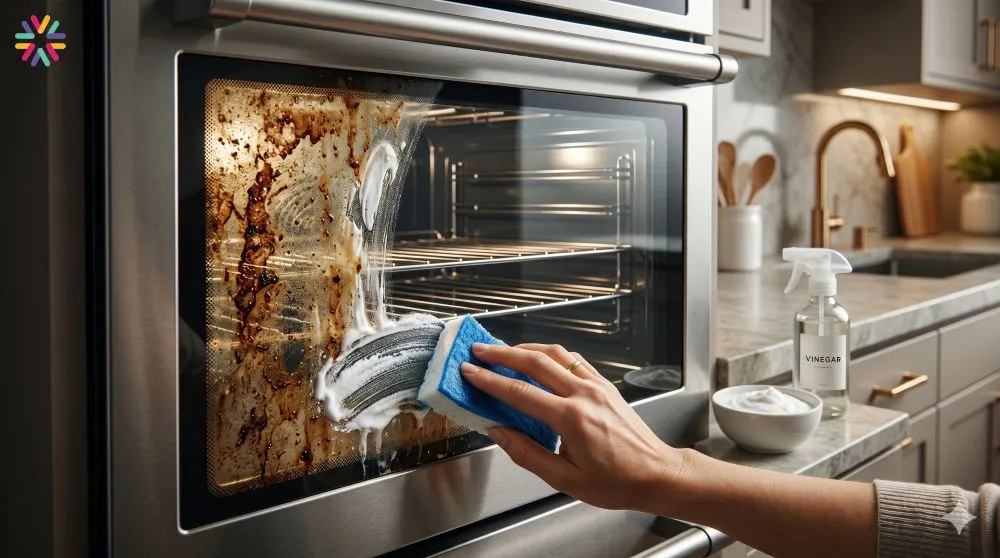
A brown, cloudy oven window can make the cleanest kitchen feel a little neglected.
The annoying part? Most people do not want to blast the inside of an oven door with harsh aerosol cleaner, especially in a place where food is baked, roasted, and warmed every week.
That is why the search for how to clean oven glass with baking soda keeps getting attention. It is simple, cheap, controlled, and surprisingly effective when you use the right technique.
Table of Contents
- Quick Answer
- Why Chemical-Free Oven Glass Cleaning Is Trending
- How Baking Soda Helps Remove Baked-On Grease
- How to Clean Oven Glass With Baking Soda
- Comparison Table: Cleaning Methods
- Risks, Concerns, and What Not to Do
- What Readers Should Do Next
- Future Outlook
- FAQ
- Final Takeaway
Quick Answer: The Best Way to Clean Oven Glass With Baking Soda
- Make a thick paste with baking soda and a small amount of water.
- Spread it over the brown stains on the oven door glass and let it sit for 20 to 45 minutes.
- Use a damp microfiber cloth or non-scratch sponge to gently loosen baked-on grease.
- For stubborn carbonized spots, use a plastic scraper at a low angle, never a razor blade unless your oven manual clearly allows it.
- Wipe clean with warm water, then finish with diluted white vinegar for streak control.
Why Chemical-Free Oven Glass Cleaning Is Trending Right Now
American kitchens are getting more practical and more ingredient-conscious.
People are reading labels. They are swapping out harsh sprays. They are asking whether every cleaning job really needs a heavy-duty commercial product with strong fumes.
Oven glass sits right in the middle of that shift.
It is one of the most visible dirty spots in the kitchen, but it is also one of the places people feel weird about spraying with aggressive cleaner. The inside of the oven door is close to food, heat, and steam. That makes many homeowners pause.
The big pain point is simple: the stains look awful, but the fix should not feel risky.
That is where the DIY oven door cleaner approach comes in. A baking soda paste gives people control. You apply it only where needed. It does not mist into the air. It does not create that harsh cleaner smell that makes you open every window in the house.
There is also a social media angle. Short cleaning videos make the process look satisfying because the before-and-after is dramatic. A brown oven window slowly turns clear again, and people instantly understand the value.
But the real reason this method sticks is not because it looks good online.
It works well enough for normal household grime, and it uses items many people already have under the sink or in the pantry.
How Baking Soda Helps Remove Baked-On Grease
To understand why baking soda works, you have to understand what that brown film actually is.
Most oven door stains are not just “dirt.” They are a mix of grease, food splatter, sugar, smoke residue, and carbonized oils that have been heated again and again.
Each time the oven runs, that residue gets tougher.
Over time, it bonds to the glass in a thin, stubborn layer. That is why a quick wipe with dish soap usually does almost nothing.
Baking soda helps in two ways.
First, it is mildly alkaline. Greasy residue tends to respond better to alkaline cleaners than plain water because alkalinity helps weaken oily buildup.
Second, it has a gentle gritty texture. That makes it a controlled micro-abrasive. In plain English, it gives your sponge a little extra grip without jumping straight to steel wool or harsh scouring pads.
This is the sweet spot for many homeowners: enough friction to loosen brown stains, but not so much aggression that you feel like you are attacking the appliance.
“RankAshva view is simple: the best oven glass cleaning method is not the harshest one. It is the one that gives you control, protects the kitchen environment, and restores clarity without turning a routine chore into a chemical event.”
How to Clean Oven Glass With Baking Soda
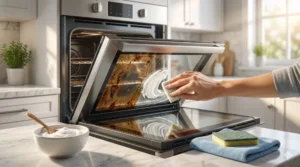
This method is designed for the inner oven door glass, where brown grease stains usually build up.
Before you start, make sure the oven is completely cool. Do not clean warm glass. Sudden temperature changes and pressure can stress the surface.
What You Need
- 1/2 cup baking soda
- 2 to 4 tablespoons water
- Small bowl
- Microfiber cloths
- Non-scratch sponge
- Plastic scraper or old plastic card
- White vinegar diluted with water in a spray bottle
- Dry towel
Step 1: Remove Loose Crumbs and Surface Debris
Open the oven door fully and wipe away crumbs, flakes, and loose burnt bits.
This small step matters. If you start scrubbing while dry debris is sitting on the glass, you can drag particles across the surface and create tiny marks.
Step 2: Mix a Thick Baking Soda Paste
Add baking soda to a bowl, then slowly mix in water until it forms a spreadable paste.
You want something close to toothpaste texture. If it runs down the door, it is too wet. Add more baking soda.
A thicker paste stays where you put it and gives better contact with the grease.
Step 3: Spread the Paste Over Brown Stains
Use your fingers, a spoon, or a soft cloth to spread the paste across the stained glass.
Focus on the darkest areas. These are usually near the lower half of the door, where drips and splatter settle during roasting and baking.
Do not pack paste into vents, seams, or openings around the oven door.
Step 4: Let It Sit
Give the paste at least 20 minutes to sit.
For heavy buildup, 45 minutes is better. The wait time helps soften the greasy layer so you are not relying only on scrubbing power.
If the paste dries out too quickly, lightly mist it with water. Do not soak it.
Step 5: Scrub Gently in Small Circles
Use a damp non-scratch sponge or microfiber cloth and work in small circles.
Do not press like you are sanding furniture. Let the paste do most of the work.
If you feel rough, stuck-on patches, pause and add a little more paste to those areas. Then keep working slowly.
Step 6: Use a Plastic Scraper for Stubborn Spots
For dark dots that still refuse to move, use a plastic scraper at a low angle.
Think of it as lifting the stain, not gouging it. Short, gentle passes are safer than one hard scrape.
Avoid metal blades unless your appliance manual says they are safe for that exact glass surface.
Step 7: Wipe, Rinse, and Repeat if Needed
Wipe away the paste with a damp cloth.
You may need several passes because baking soda can leave a white film. Rinse the cloth often and keep wiping until the surface feels clean.
If some stains remain, repeat the paste treatment on those spots only. You do not have to redo the entire door.
Step 8: Finish With Diluted Vinegar
Once the baking soda residue is gone, spray a light mist of diluted white vinegar on the glass.
Wipe with a clean microfiber cloth, then dry with a towel. This helps remove haze and gives the glass a clearer finish.
Do not mix vinegar into the baking soda paste at the beginning. The fizz looks exciting, but it can weaken the cleaning action too early. Use vinegar at the end as a rinse and shine step.
What About Cleaning Oven Glass Between Doors?
Cleaning oven glass between doors is a different job.
If stains are trapped between the glass panels, wiping the inside surface will not reach them. This usually happens when grease slips through vents or gaps along the top of the door.
Some ovens allow you to remove the door or access the space between panels. Others do not make this easy.
Before trying it, check your oven manual. Removing screws, loosening trim, or taking apart the door without instructions can damage seals, affect insulation, or make the door hard to reassemble.
If you rent, have a newer appliance, or are not comfortable handling the door, it is smarter to stop at the accessible glass and call the manufacturer or a repair professional for the between-panel issue.
Comparison Table: Oven Glass Cleaning Methods
| Method | Best For | Main Benefit | Main Risk or Limitation |
|---|---|---|---|
| Baking soda paste | Brown grease stains and cloudy oven glass | Low-fume, cheap, controlled application | Needs time and gentle scrubbing |
| Dish soap and warm water | Fresh spills and light grease | Very safe and easy | Usually weak on baked-on residue |
| Commercial oven cleaner | Severe, neglected oven buildup | Fast and powerful | Strong fumes, harsh ingredients, careful handling needed |
| Steam cleaning | Softening light grime before wiping | Simple and low effort | May not remove old carbonized stains |
| Self-clean cycle | Full oven cavity cleaning on compatible models | Burns residue into ash | High heat, odors, smoke risk, not ideal for every home |
Risks, Concerns, and Opposing Views
Baking soda is a strong choice for many homes, but it is not magic.
If your oven door has years of thick, black buildup, one round may not fully restore it. You may need two or three patient treatments.
Some cleaning experts also prefer commercial products because they work faster and require less scrubbing. That is a fair point. If speed matters most, a purpose-made cleaner may win.
Still, speed is not the only factor people care about.
Many U.S. households include kids, pets, small apartments, limited ventilation, or people sensitive to strong smells. In those situations, a slower low-fume approach can feel much more practical.
There are also surface-safety concerns.
Never use steel wool on oven glass. Avoid rough scouring pads. Be careful with razor blades. Even if glass looks tough, scratches can catch light and make the door look permanently cloudy.
Also avoid flooding the oven door with liquid. Too much water can run into vents or seams and create streaks between the glass panels.
The best approach is controlled moisture, patient paste contact, and gentle pressure.
What Readers Should Do Next
Start with a small test area.
Pick a lower corner of the oven glass and apply a small amount of baking soda paste. Let it sit, wipe it away, and check how the surface responds.
If it looks good, move to the full stained area.
For regular maintenance, wipe the oven glass once the appliance is fully cool after messy baking or roasting. Fresh grease is much easier to remove than grease that has been reheated ten times.
Use a baking sheet under pies, casseroles, and anything likely to bubble over. Small prevention habits save a lot of scrubbing later.
If your oven window is already dark brown, do not try to fix it in one angry cleaning session. Treat it like layers. Remove what comes off easily, rinse well, then repeat another day if needed.
That mindset protects the glass and keeps the chore from becoming frustrating.
Future Outlook: The Rise of Safer Kitchen Cleaning
The move toward gentler kitchen cleaning is not going away.
Consumers want methods that feel safer, simpler, and less wasteful. They also want cleaning routines that do not require a cabinet full of specialty products.
That is why baking soda, vinegar, microfiber cloths, steam, and plant-based cleaners keep gaining attention.
For oven glass, the future will likely be a mix of better appliance design and smarter home habits. More people will look for removable glass panels, easier-access oven doors, and cleaners that balance performance with lower odor.
At the same time, DIY methods will stay popular because they are flexible. You can use a baking soda paste for a light touch-up or a deeper scrub, depending on the mess.
The winning trend is not about rejecting every store-bought cleaner. It is about using the least aggressive method that gets the job done.
FAQ: Cleaning Oven Glass With Baking Soda
Can baking soda really remove brown stains from an oven door?
Yes, baking soda can help remove brown stains from oven door glass, especially when the stains are caused by baked-on grease and food splatter.
It works best when made into a thick paste and given time to sit before scrubbing.
How long should baking soda sit on oven glass?
For light stains, 20 minutes may be enough.
For darker, baked-on grease, let the paste sit for 30 to 45 minutes. Keep it slightly damp so it does not dry into a hard crust.
Can I use vinegar and baking soda together on oven glass?
Use them in stages.
Apply baking soda paste first, scrub, and wipe it away. Then use diluted vinegar as a final rinse to help clear residue and streaks.
How do I clean inside of glass oven door panels?
To clean inside of glass oven door panels, check your oven manual first.
Some models allow safe door removal or panel access. Others do not. If grease is trapped between the panes and you are unsure, contact the manufacturer or an appliance technician.
Is baking soda safer than commercial oven cleaner?
Baking soda is lower-fume and easier to control than many aerosol oven cleaners.
Commercial cleaners can work faster on extreme buildup, but they often need stronger ventilation, gloves, and careful label-following.
Final Takeaway
A stained oven window is not just a cosmetic problem. It changes how your kitchen feels, makes the appliance look older, and blocks your view while food cooks.
The good news is that you do not need to start with the harshest cleaner on the shelf.
For most homes, learning how to clean oven glass with baking soda is the smartest first move. It is affordable, low-fume, beginner-friendly, and strong enough for a surprising amount of baked-on grease when you give it time to work.
The RankAshva editorial opinion is simple: choose the method that restores the glass without making your kitchen feel less safe, because a cleaner oven should bring relief, not chemical worry.




More Stories
100 Non-Negotiable Rules for Men
Salvaging Wardrobes: The Definitive Guide to Removing Set-In Grease Stains After Washing
Revive Your Linens: How to Eradicate the Musty Mildew Smell from Bath Towels