
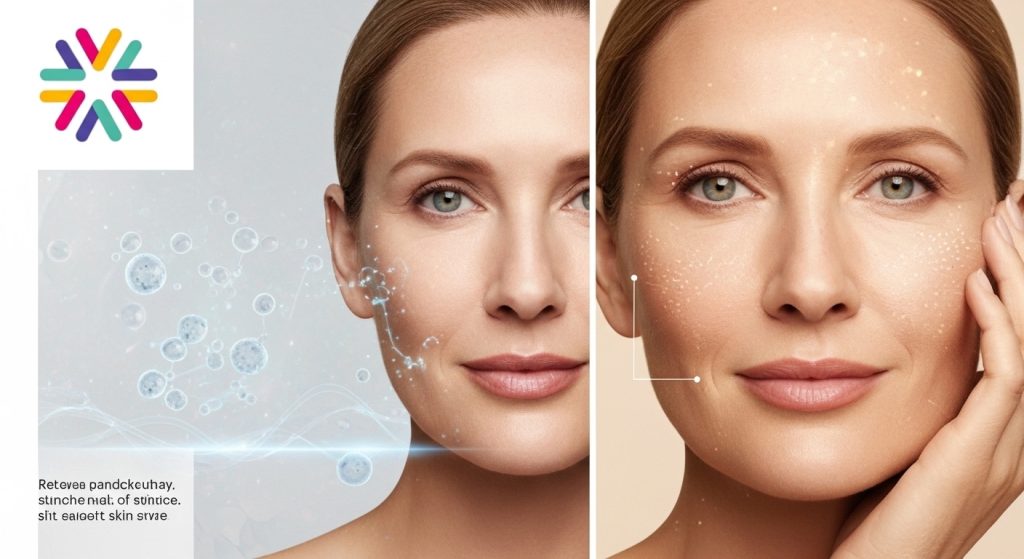
Quick Answer: Exosome Serums vs. Retinol
- Retinol is currently the more proven choice for fine lines, uneven tone, rough texture, mild acne, and visible signs of aging.
- Exosome serums are promising but still emerging, with growing interest in skin repair, barrier support, and post-treatment recovery.
- For beginners, retinol is usually the better first investment because it is widely available, well studied, and more affordable.
- Exosome skincare may work best as a supportive product, not as a replacement for sunscreen, moisturizer, or retinol.
- The smartest skincare routine combines evidence and consistency, rather than chasing every new luxury trend.
Exosome Serums vs. Retinol: Understanding the Skin Regeneration Debate
The debate around exosome serums vs. retinol has become one of the most talked-about topics in beauty because it reflects a larger change in skincare. Consumers are no longer satisfied with products that only promise glow or hydration. They want ingredients that appear to support deeper skin renewal, long-term repair, and healthier aging.
Retinol has been a major part of anti-aging skincare for decades. It belongs to the retinoid family, which is derived from vitamin A. In simple terms, retinol helps encourage skin cell turnover. This means it supports the process of replacing older surface cells with fresher-looking skin over time.
That is why retinol is commonly used for concerns such as fine lines, dullness, uneven tone, visible pores, rough texture, and mild breakouts. It does not work overnight, but when used correctly, it can gradually improve the way skin looks and feels.
Exosome serums are newer and sound much more futuristic. Exosomes are tiny messenger particles released by cells. They carry signals that may influence how cells communicate. In skincare marketing, exosomes are often described as advanced messengers that support repair, calm the skin, and improve visible signs of aging.
This idea is exciting because skin aging is not only about the surface. It involves collagen loss, inflammation, barrier damage, slower repair, environmental stress, and reduced cellular communication. Exosome skincare is built around the idea that better communication may help skin behave in a healthier, more youthful way.
However, the key difference is evidence. Retinol has a long history of use and strong support in dermatology. Exosome serums are promising, but the cosmetic category is still young. Many products sound impressive, but not all of them have the same quality, source, stability, or testing behind them.
Why Exosome Serums Are Trending in the United States
Exosome serums are trending because they fit perfectly into today’s beauty culture. U.S. consumers are highly interested in regenerative skincare, med-spa treatments, barrier repair, and high-performance products that feel more advanced than traditional creams.
Social media has also played a major role. Before-and-after videos, luxury skincare routines, celebrity facials, and dermatologist-led content have helped push exosomes into mainstream beauty conversations. The ingredient sounds scientific, premium, and innovative, which makes it attractive to shoppers who want the next big thing.
Another reason exosome serums are gaining attention is the rise of post-procedure skincare. People who receive treatments such as microneedling, lasers, or chemical peels often look for calming, repairing, and recovery-focused products. Exosome-based formulas are frequently positioned in this space, although consumers should be careful not to confuse cosmetic skincare with medical treatment.
There is also a growing frustration with slow skincare results. Many people want faster improvement in texture, firmness, redness, and dullness. Because exosome serums are often described as regenerative, they create the expectation of advanced repair. That expectation is powerful, but it also needs to be managed carefully.
In reality, most skincare improvements take time. Even strong ingredients like retinol usually require consistent use for several months. Exosome serums may support the skin, but no topical serum can fully reverse aging, replace professional care, or deliver medical-level regeneration from a bottle.
Why Retinol Still Has the Stronger Case
Retinol remains one of the strongest choices in skincare because its benefits are clear and practical. It has been studied for years and is widely recommended for visible signs of aging. It is not just a trend. It is a proven active ingredient with a long track record.
Retinol can help improve skin texture by encouraging cell turnover. It can also support a smoother-looking surface, reduce the appearance of fine lines, and help fade uneven tone over time. For people dealing with clogged pores or mild acne, retinol may also be useful because it helps prevent dead skin cells from building up inside pores.
Another advantage is accessibility. Retinol products are available at many price points, from drugstore options to premium formulas. This makes it easier for consumers to find a product that fits their budget and skin tolerance.
Retinol also has clearer usage guidelines. Most dermatologists recommend starting slowly, using a small amount at night, applying moisturizer, and wearing sunscreen every morning. The process is not complicated, but it does require patience.
The downside is irritation. Retinol can cause dryness, peeling, redness, tightness, or sensitivity, especially when used too often at the beginning. Many beginners make the mistake of applying it every night immediately, combining it with too many exfoliating acids, or skipping sunscreen. These mistakes can damage the skin barrier and make retinol feel harsher than it needs to be.
Used correctly, however, retinol remains one of the most dependable ingredients for long-term skin renewal.
“At RankAshva, we believe the future of skincare belongs to ingredients that combine innovation with proof. Exosomes may define tomorrow’s regenerative beauty, but retinol still holds today’s most trusted path to visible renewal.”
Why This Topic Matters Right Now
This topic matters because skincare consumers are spending more money than ever on products that promise advanced results. A single exosome serum can cost significantly more than a standard retinol product, and the language around these formulas can be difficult for beginners to understand.
For U.S. consumers, the main issue is not whether exosomes are interesting. They are. The issue is whether the product claims are realistic, whether the formula is well made, and whether the buyer understands what the ingredient can and cannot do.
There is also a larger concern around beauty marketing. Words like “stem cell,” “regenerative,” “repair,” and “cellular renewal” can sound medical, even when the product is sold as a cosmetic. That can create confusion. A cosmetic serum may improve the appearance of skin, but it should not be treated like a medical therapy.
Retinol has its own learning curve, but its role is easier to understand. It is an active ingredient used for gradual improvement in skin appearance. Exosome serums, on the other hand, are still surrounded by more uncertainty because formulas vary widely from brand to brand.
This makes consumer education essential. People should know when to choose proven basics, when to explore innovation, and when to be skeptical of claims that sound too good to be true.
Comparison Table: Exosome Serums vs. Retinol
| Category | Exosome Serums | Retinol |
|---|---|---|
| Main Purpose | Supports repair-focused and regenerative skincare claims | Supports cell turnover, texture improvement, and visible anti-aging |
| Evidence Level | Promising but still developing in cosmetic skincare | Strong, long-standing support in dermatology |
| Best For | Barrier support, dullness, recovery-focused routines, luxury skincare users | Fine lines, rough texture, clogged pores, uneven tone, mild acne |
| Main Risk | High price, unclear standards, exaggerated claims | Dryness, peeling, irritation, increased sun sensitivity |
| Beginner Friendly? | Possibly, if the formula is gentle and claims are realistic | Yes, when introduced slowly and used with moisturizer |
| Overall Winner Today | Best as a supportive add-on | Best evidence-backed choice for most people |
Risks, Concerns, and Opposing Views
The biggest concern with exosome serums is not that they are useless. The concern is that the marketing may be moving faster than the evidence. Many consumers may not know what type of exosome-related ingredient is being used, where it comes from, how stable it is, or whether it can reach the areas of the skin where it would need to work.
There is also the issue of standardization. Two products may both use the word “exosome,” but they may not be equal in quality, concentration, source, or performance. This makes it difficult for shoppers to compare products fairly.
Another concern is pricing. Exosome serums are often positioned as premium products. That does not automatically mean they are better. A high price may reflect advanced manufacturing, but it may also reflect luxury branding and trend demand.
Retinol has a different set of concerns. It can be irritating, especially for sensitive skin. People with rosacea-prone skin, eczema-prone skin, or a damaged skin barrier may struggle with traditional retinol products. Retinol is also not recommended during pregnancy, and users should be consistent with sun protection.
The opposing view is that innovation should not be dismissed simply because it is new. Exosome research may continue to grow, and future formulas may become more reliable, transparent, and effective. The skincare industry often evolves through early experimentation before stronger products become mainstream.
That is why the best answer is balanced. Exosome serums deserve attention, but retinol deserves trust.
What Readers Should Do Before Choosing
If you are new to active skincare, start with the basics. A good routine does not need ten steps. It needs consistency, protection, and ingredients that match your skin goals.
In the morning, use a gentle cleanser if needed, apply moisturizer, and finish with broad-spectrum sunscreen. Sunscreen is essential because UV exposure is one of the biggest causes of premature aging, uneven tone, and collagen breakdown.
At night, consider adding retinol two or three times per week. Use a pea-sized amount for the entire face. Apply it after cleansing and before or after moisturizer, depending on your skin’s sensitivity. If your skin becomes dry or irritated, reduce the frequency instead of quitting immediately.
If you want to try an exosome serum, use it as a support product. It may fit well on non-retinol nights or in a calming routine focused on hydration and barrier care. Look for brands that explain their technology clearly and avoid vague miracle claims.
Do not introduce retinol, exfoliating acids, strong vitamin C, and exosome products all at once. When too many actives are added together, it becomes impossible to know what is helping and what is irritating your skin.
For persistent acne, melasma, severe sensitivity, or sudden skin changes, speak with a board-certified dermatologist. Skincare can support healthy-looking skin, but some concerns need professional diagnosis and treatment.
Future Outlook: What Comes Next in Skin Regeneration?
The future of skin regeneration will likely be built around smarter combinations. Retinol will continue to play a major role because it is effective, familiar, and accessible. At the same time, newer categories such as exosomes, peptides, growth factors, postbiotics, and barrier-repair ingredients will continue to grow.
Exosome skincare may become more credible as brands improve testing, sourcing, delivery systems, and transparency. The most successful products will be the ones that show real-world results without making unrealistic promises.
Retinol will also keep evolving. More gentle formulas, encapsulated delivery systems, retinaldehyde products, and skin barrier-friendly routines are already making vitamin A skincare easier for beginners to tolerate.
In the future, the question may not be whether exosome serums beat retinol. The better question may be how these ingredients can work together in a balanced routine. Retinol may remain the foundation for visible renewal, while exosome-inspired formulas may support recovery, comfort, and skin resilience.
FAQ: Exosome Serums vs. Retinol
Are exosome serums better than retinol?
For most people, retinol is still the better proven choice. Exosome serums are promising, but they do not yet have the same level of long-term cosmetic evidence as retinol. If your main goals are fine lines, texture, and uneven tone, retinol is usually the stronger option.
Can I use exosome serum and retinol together?
Yes, some people may be able to use both, but it is best to introduce them slowly. Retinol can be used at night, while an exosome serum may be used on alternate nights or as part of a calming routine. If your skin becomes irritated, reduce the number of active products.
Is retinol good for skin regeneration?
Retinol supports visible skin renewal by encouraging cell turnover and improving the look of texture, tone, and fine lines over time. It is not a miracle cure, but it is one of the most reliable ingredients for improving the appearance of aging skin.
Are exosome serums safe for sensitive skin?
Some exosome serums may be gentle, but safety depends on the full formula, product quality, and your individual skin condition. Sensitive skin users should patch test first and avoid products that make aggressive claims or include too many strong active ingredients.
Which ingredient should beginners choose first?
Most beginners should start with sunscreen, moisturizer, and a gentle retinol before investing in expensive exosome serums. Once the basic routine is stable, an exosome serum can be considered as an optional add-on.
Conclusion
In the debate over exosome serums vs. retinol, retinol is the practical winner today. It has stronger evidence, clearer benefits, better accessibility, and a more established place in everyday skincare routines.
Exosome serums are still worth watching. They represent an exciting direction in regenerative beauty and may become more important as research, formulation standards, and consumer transparency improve. But for now, they are best viewed as a promising support product rather than a proven replacement for retinol.
The smartest skincare choice is not always the newest one. It is the one that matches your goals, respects your skin barrier, and delivers results you can maintain. As an expert editorial perspective, RankAshva sees retinol as today’s most dependable skin renewal ingredient, while exosome serums remain one of the most interesting innovations shaping the future of skincare.




More Stories
Pool-Proof Summer Beauty: Makeup That Actually Survives the ‘Take Her Swimming’ Trend
Summer 2026 Beauty Trends: How to Master Skinimalism and the Perfect Glazed Skin
2026 Beauty Trends Explained: The Foundation in Water Hack, Brat Beauty, and the New Skin Rules