
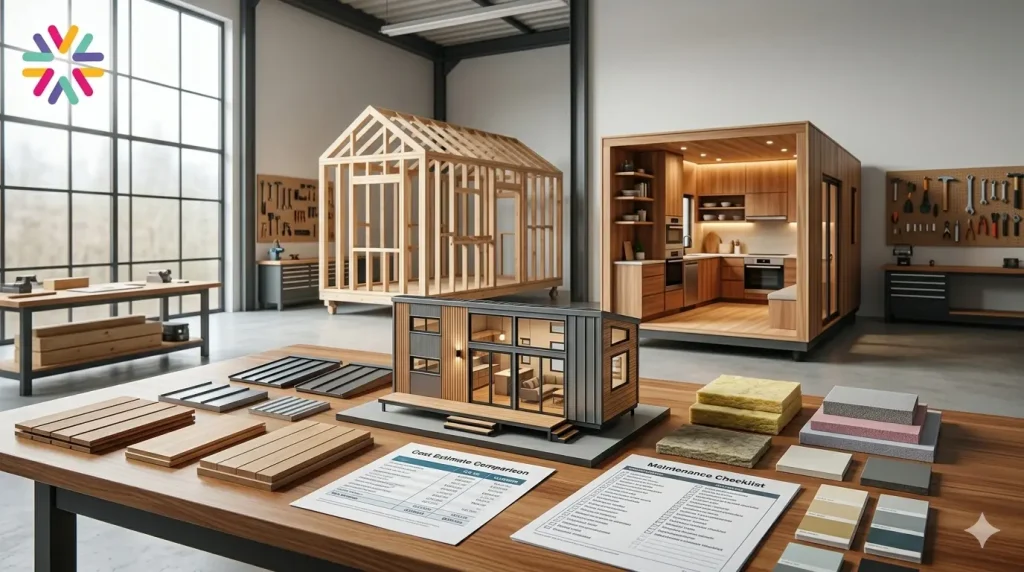
Tiny homes promise a simpler, more affordable way to live. But the biggest decision often happens before the first wall goes up: should you buy a tiny home kit or pay for a custom build?
In 2026, this question matters more than ever. Prefab housing, backyard cottages, ADUs, and small-space living are gaining attention across the United States, but buyers are also discovering that the cheapest option on paper is not always the best value over time.
Quick Answer: Are Tiny Home Kits Worth It in 2026?
- Tiny home kits can be worth it for buyers who want a faster, more budget-friendly shell and are comfortable managing permits, site work, utilities, and finishing costs.
- Custom tiny homes are better for long-term living, difficult climates, unique land conditions, accessibility needs, or higher resale goals.
- The biggest hidden costs of DIY tiny house kits often include foundation work, delivery, labor, insulation upgrades, plumbing, electrical systems, permits, and code compliance.
- Prefab tiny homes can save time, but quality depends heavily on materials, engineering, climate protection, and the builder’s standards.
- The best choice depends on use. A weekend cabin, backyard office, rental ADU, and full-time home each require a different level of durability and planning.
Tiny Home Kits vs. Custom Builds: What Is the Real Difference?
A tiny home kit is usually a pre-designed package of materials or components. Some kits include only the shell, framing, siding, windows, and roof. Others come with more complete systems, such as insulation, doors, flooring, cabinets, or rough electrical planning.
A custom tiny home is designed and built around the buyer’s specific needs. It may be built on-site like a traditional house, built in a workshop and delivered, or created by a specialist tiny home builder. The design, materials, layout, storage, climate control, and finish level are usually more flexible.
The main difference is control. A kit gives you a defined structure at a more predictable starting price. A custom build gives you more control over comfort, performance, aesthetics, and long-term value, but it usually costs more and takes longer.
For many U.S. buyers, the decision is not simply “cheap versus expensive.” It is about risk, time, skill level, weather performance, permit approval, and how the home will be used five or ten years from now.
Why This Topic Is Trending in the United States
Tiny home interest is rising because Americans are looking for flexible housing options. Higher housing costs, smaller household sizes, remote work, multigenerational living, and interest in backyard rental units have made compact homes more appealing.
At the same time, prefab and modular construction are becoming more visible. Buyers are seeing tiny home kits online, on retail marketplaces, through social media videos, and from builders advertising faster timelines than traditional construction.
The trend is also connected to accessory dwelling units. In many parts of the United States, homeowners are exploring small backyard homes for aging parents, adult children, rental income, guest space, or home offices. This makes the prefab tiny home vs. stick-built comparison more practical than ever.
Still, the online version of tiny home living can be misleading. A kit may look affordable in a product listing, but the final cost depends on land, foundation, utility hookups, labor, local code requirements, and interior completion. That is why a realistic comparison is essential.
Cost Comparison: The Starting Price Is Not the Final Price
Tiny home kits often appear cheaper because the advertised price usually covers only part of the project. A basic shell kit may not include site preparation, foundation, insulation upgrades, plumbing, electrical work, HVAC, appliances, permits, delivery, or professional labor.
Custom builds usually start at a higher price, but they may include more complete planning, better engineering, stronger materials, and fewer surprises during construction. A custom builder can also design around local code, weather conditions, land slope, storage needs, and utility access.
For a weekend retreat or backyard studio, a kit may make sense. For full-time living, the total cost of making a kit safe, comfortable, legal, and energy efficient can narrow the gap between prefab and custom construction.
Hidden Costs of DIY Tiny House Kits
The hidden costs of DIY tiny house kits are often where budgets fail. Delivery can be expensive, especially if the kit is heavy, oversized, or shipped across the country. Site preparation may require grading, gravel, drainage, a slab, piers, or a crawlspace.
Labor is another major factor. Even a “DIY-friendly” kit requires tools, time, physical ability, and construction knowledge. If you need to hire help for framing, roofing, wiring, plumbing, or finish work, your savings may shrink quickly.
Permits can also add complexity. Some jurisdictions may require stamped plans, energy calculations, inspections, fire safety features, or specific foundation details. If the kit was not designed for your local building code, you may need changes before approval.
Then come the comfort upgrades: better insulation, stronger windows, moisture control, durable flooring, proper ventilation, heating, cooling, and weather-resistant siding. These details matter because a tiny home has less room for construction mistakes. Poor insulation or moisture control can make a small space uncomfortable fast.
Quality and Durability: What Buyers Should Look For
Tiny home kit durability and insulation standards should be a top priority. A low-cost kit may be acceptable for mild-weather seasonal use, but it may not perform well in cold winters, humid summers, high winds, or heavy snow areas.
Look at the structure first. Strong framing, proper roof design, weather-resistant sheathing, high-quality windows, and durable siding matter more than trendy interior finishes. A beautiful tiny home with weak weather protection can become expensive to repair.
Insulation is especially important. Tiny homes are small, so temperature changes can feel intense. Good insulation, air sealing, ventilation, and moisture management help reduce heating and cooling costs while improving comfort.
For sustainable living, the best materials for sustainable tiny homes often include responsibly sourced wood, metal roofing, fiber cement siding, low-VOC finishes, high-performance insulation, energy-efficient windows, durable flooring, and long-lasting fixtures. Sustainability is not only about using natural materials. It is also about choosing materials that last.
“RankAshva sees the tiny home decision as less about buying small and more about building wisely; the best compact homes are not the cheapest ones, but the ones designed to age with comfort, purpose, and resilience.”
How Long Does It Take to Assemble a Tiny House Kit?
The timeline depends on the kit type, site readiness, weather, permits, and skill level. A simple shell kit may be assembled faster than a custom home, but that does not mean the entire project is finished quickly.
Many buyers underestimate the time required before and after assembly. Before building, you may need zoning approval, permits, utility planning, foundation work, delivery scheduling, and contractor coordination. After assembly, you may still need interior finishing, inspections, appliances, plumbing, electrical systems, HVAC, and exterior grading.
A custom build may take longer upfront because of design and planning, but the process can be smoother if the builder handles more details. For buyers with limited construction experience, a professional custom or semi-custom build may save stress even if it costs more.
Comparison Table: Tiny Home Kit vs. Custom Build
| Category | Tiny Home Kit | Custom Build |
|---|---|---|
| Starting Cost | Usually lower, but often incomplete | Usually higher, but may include more complete planning |
| Timeline | Faster assembly if permits and site work are ready | Longer design and build timeline |
| Design Flexibility | Limited to existing plans and options | High flexibility for layout, storage, accessibility, and finishes |
| Code Readiness | Varies widely by kit and location | Can be designed around local requirements |
| Durability | Depends on materials and upgrades | Can be optimized for climate and long-term use |
| Best For | Budget projects, cabins, studios, hands-on buyers | Full-time living, ADUs, resale value, difficult sites |
Risks, Concerns, and Opposing Views
The strongest argument for tiny home kits is affordability. Many buyers like the idea of controlling the process, saving on labor, and building something with their own hands. For the right person, that can be rewarding and cost-effective.
The opposing view is that DIY savings are often overstated. If a buyer lacks construction experience, the project can take longer, cost more, and create safety or code problems. Mistakes in waterproofing, electrical work, plumbing, ventilation, and structural connections can be expensive to fix.
Custom builds also have risks. A poorly managed custom project can go over budget. Some builders may charge premium prices without delivering better materials or documentation. Buyers should review contracts carefully, check references, confirm warranties, and understand what is included.
There is also the resale question. Tiny home resale value in 2026 depends on legality, quality, location, foundation type, financing options, and buyer demand. A permitted tiny home on a permanent foundation may appeal to more buyers than an unpermitted DIY structure or a unit that cannot be legally occupied full-time.
Maintenance Tips for Prefab Tiny Homes
Prefab tiny homes can last well when maintained properly. Start with moisture control. Check roof seams, flashing, windows, doors, siding joints, and any roof penetrations at least twice a year. Small leaks can cause major damage in compact spaces.
Keep ventilation systems clean and functional. Cooking, showering, and sleeping all add moisture to a tiny home. Exhaust fans, fresh air intake, and dehumidification may be necessary, especially in humid or cold climates.
Inspect the foundation or trailer regularly. For wheeled tiny homes, check tires, axles, leveling, tie-downs, and undercarriage protection. For permanent homes, watch for drainage problems, soil movement, pests, and cracks around foundation supports.
Maintain exterior finishes before they fail. Repaint, reseal, clean gutters, trim nearby vegetation, and repair damaged siding quickly. In a small home, protecting the shell is one of the most important long-term investments.
What Readers Should Do Before Choosing
Start by defining the purpose of the home. A guest cabin has different requirements than a full-time residence. A backyard rental ADU needs different planning than a portable vacation unit. Write down how the tiny home will be used, where it will sit, who will live in it, and how long you expect to keep it.
Next, verify zoning and permits before buying a kit or signing with a builder. Ask your local planning and building departments whether your structure type is allowed, what code applies, and what inspections are required.
Then compare total project cost, not advertised price. Include land work, foundation, delivery, tools, labor, utilities, insulation, appliances, permits, taxes, insurance, and future maintenance.
Finally, ask for documentation. Good kit companies and custom builders should provide clear plans, material specifications, warranty terms, engineering information when needed, and realistic assembly or construction guidance.
Future Outlook: Tiny Home Resale Value and 2026 Trends
The tiny home market is likely to become more professional. Buyers are becoming more educated, and local governments are paying closer attention to safety, zoning, and energy performance. This may benefit higher-quality prefab and custom homes while making low-quality, unpermitted units harder to resell.
Expect more semi-custom options. These homes may offer the best middle ground: a proven prefab structure with upgrade choices for insulation, siding, layout, windows, finishes, and code documentation.
Sustainable materials and energy efficiency will also matter more. Buyers are not only looking for small homes; they want homes that are comfortable, durable, lower-cost to operate, and easier to maintain.
In the long run, tiny homes with legal placement, strong construction, efficient systems, and practical layouts are likely to hold value better than bargain kits that require major upgrades later.
FAQ
Are tiny home kits worth it in 2026?
Tiny home kits can be worth it if you understand the full cost and have a realistic plan for permits, site work, labor, utilities, and finishing. They are best for hands-on buyers, simple structures, and projects where customization is not the top priority.
What are the hidden costs of DIY tiny house kits?
Common hidden costs include delivery, foundation work, tools, labor, permits, utility hookups, insulation upgrades, plumbing, electrical systems, HVAC, appliances, and code-related changes.
Is a prefab tiny home better than a stick-built tiny home?
A prefab tiny home may be faster and more predictable, while a stick-built or custom tiny home may offer better flexibility for site conditions, local code, climate, and long-term living needs.
How long does it take to assemble a tiny house kit?
Assembly time varies widely. A simple shell may go up relatively quickly, but the full project can take much longer once permits, foundation, utilities, interior finishes, inspections, and weather delays are included.
Do tiny homes have good resale value?
Tiny home resale value depends on legal status, build quality, location, foundation type, energy performance, and buyer demand. A permitted, well-built tiny home usually has stronger resale potential than an unpermitted or poorly documented DIY unit.
Conclusion
The choice between a tiny home kit and a custom build is not only about upfront price. It is about how the home will perform, how easy it will be to permit, how comfortable it will feel, and how well it will serve your life over time.
A kit can be a smart choice for budget-conscious buyers who are realistic about labor and hidden costs. A custom build can be the better investment for full-time living, difficult climates, long-term comfort, and stronger resale potential.
The smartest path is to compare the complete project, not the sales price. When you look at cost, quality, legality, durability, maintenance, and future use together, the right tiny home choice becomes much clearer.




More Stories
The Return of Capris and Kitten Heels: How to Style 2026’s Biggest Y2K Fashion Revival
Fibermaxxing Explained: The 2026 Gut Health Trend Replacing the Protein Craze
Spring 2026 Fashion Trends: Why Crochet Shirts and Boudoir Aesthetics Are Taking Over Summer