
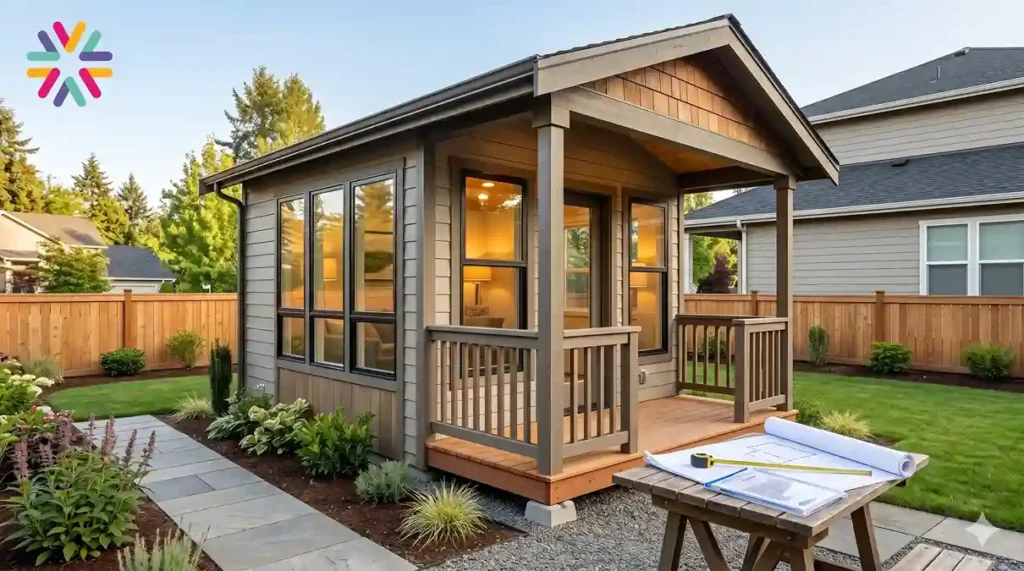
Backyard sheds are no longer just for lawn tools, bikes, and holiday decorations. Across the United States, homeowners are asking a serious question: can a simple shed become a legal tiny home?
The answer is more complicated than a quick yes or no. In 2026, backyard housing is trending because of rising rent, tighter housing supply, remote work, aging parents, and the growing popularity of accessory dwelling units. But a storage shed is not automatically a legal residence. To live in one full-time, it must usually be converted, permitted, inspected, and approved as habitable space.
Quick Answer: Can You Legally Live in a Shed in 2026?
- In most places, you cannot legally live in a standard backyard shed as-is. Storage sheds are usually not approved for sleeping, cooking, bathing, or full-time occupancy.
- You may be able to convert a shed into a tiny house if local zoning allows it and the structure meets building, electrical, plumbing, fire safety, energy, and sanitation requirements.
- The key legal category is often an ADU, or accessory dwelling unit. Many cities now allow backyard cottages, garage apartments, or small secondary homes on residential lots.
- Permits matter. A shed used as a home usually needs habitable space permits, inspections, utility approvals, and sometimes a separate address or certificate of occupancy.
- Rules vary by city and county. Backyard shed living laws in the USA are local, so checking your zoning office before buying or converting a shed is essential.
Can You Legally Live in a Shed in 2026? What Is Actually Happening
The shed-to-tiny-home trend is growing because Americans are looking for cheaper, flexible housing options. A new apartment can be expensive. A traditional home addition can cost more than many families can afford. A backyard structure feels simpler, faster, and more realistic.
That is why searches like “how to convert a shed into a tiny house,” “sheds for sale near me conversion,” and “habitable space permits for sheds 2026” are rising. People are not only dreaming about minimalist living. They are trying to solve real housing problems: adult children returning home, elderly parents needing nearby care, renters looking for affordable space, and homeowners searching for extra income.
But the legal system does not treat every backyard structure the same way. A shed built for storage is not designed as a dwelling. It may lack a proper foundation, insulation, fire separation, emergency exits, code-compliant wiring, plumbing, heating, ventilation, or weather protection. Even if it looks comfortable after renovation, local officials may still classify it as an unapproved accessory structure unless it has gone through the correct permitting process.
The important shift in 2026 is that more jurisdictions are warming up to small backyard housing. Some cities are creating pre-approved ADU plans. Others are offering rebates, financing support, or clearer permit pathways. This does not mean every shed can become a home. It means the legal pathway is becoming easier to understand in many places.
Why Backyard Shed Living Laws in the USA Matter Right Now
Backyard housing has become a national conversation because it sits at the intersection of affordability, land use, family needs, and neighborhood change. For homeowners, a converted shed can look like a practical way to add living space without moving. For renters, it may look like a lower-cost alternative to a traditional apartment. For cities, small secondary homes can add housing supply without building large apartment complexes.
The United States housing market has made this conversation urgent. Many households are spending more of their income on rent or mortgage payments. Younger adults are delaying homeownership. Older adults want to age in place near family. Families are looking for multigenerational options that provide privacy without separation.
That is why accessory dwelling units are gaining attention. An ADU is typically a small independent home on the same lot as a primary house. It may be detached, attached, built over a garage, or created from an existing structure. In some cases, a shed conversion might qualify as an ADU, but only if it meets local rules.
The legal challenge is safety. Governments are not only deciding whether people should be allowed to live in small spaces. They are deciding whether those spaces are safe enough for daily life. A legal dwelling must usually support sleeping, cooking, sanitation, heating, ventilation, safe electrical systems, emergency escape, and long-term weather protection.
“The future of backyard living is not about hiding a bed inside a storage shed; it is about transforming overlooked space into safe, permitted, dignified housing. RankAshva sees the 2026 shed-to-tiny-home movement as a practical response to America’s demand for smarter, smaller, and more flexible homes.”
Shed vs. Tiny House vs. ADU: Key Differences
Before buying a shed or starting a conversion, it is important to understand the difference between a storage building, a tiny house, and a legal ADU. These terms are often used casually online, but they mean very different things during permitting.
| Category | Typical Use | Can You Live There? | Main Requirement | Biggest Risk |
|---|---|---|---|---|
| Backyard Storage Shed | Tools, equipment, storage, hobby space | Usually no | Accessory structure permit, if required | Illegal occupancy, unsafe utilities, fines |
| Converted Shed | Office, studio, guest space, possible tiny home | Only if approved as habitable space | Building permits, inspections, code upgrades | Spending money before zoning approval |
| Tiny House on Foundation | Small permanent dwelling | Potentially yes | Residential building code compliance | Local minimum size or zoning limits |
| Accessory Dwelling Unit | Secondary home on the same lot | Often yes, where allowed | ADU permit and certificate of occupancy | Setbacks, lot coverage, parking, utility rules |
| Tiny Home on Wheels | Mobile or semi-mobile living | Depends heavily on local law | RV, park model, or local tiny-home approval | Not accepted as permanent housing in many areas |
How to Convert a Shed Into a Tiny House Legally
The safest way to approach a shed conversion is to treat it like a residential construction project from the beginning. Do not start with flooring, paint, and furniture. Start with zoning, permits, structure, and utilities.
First, check zoning. Call your city or county planning department and ask whether a detached dwelling, ADU, backyard cottage, or converted accessory structure is allowed on your property. Ask about setbacks, maximum size, height limits, lot coverage, owner-occupancy rules, parking, rental restrictions, and whether short-term rentals are allowed.
Second, confirm the building classification. A shed may need to be reclassified from a storage structure to habitable space or a dwelling unit. That change can trigger major requirements. The building department may ask for plans from a licensed professional, structural details, foundation information, energy compliance, electrical layout, plumbing design, and mechanical systems.
Third, inspect the shed’s structure. Many sheds for sale near you may be attractive and affordable, but they are not all built for residential occupancy. A legal tiny home needs structural integrity, proper anchoring, weather resistance, insulation, and safe openings for light, ventilation, and emergency escape. A cheap shed may cost more to upgrade than a purpose-built ADU shell.
Fourth, plan utilities correctly. Full-time living usually requires approved electrical service, heating and cooling, potable water, wastewater disposal, bathroom facilities, and sometimes a kitchen. Septic systems may need capacity review. Sewer connections may need utility approval. Off-grid setups may still be regulated.
Fifth, get permits before construction. Habitable space permits for sheds in 2026 are not just paperwork. They protect you from unsafe work, denied insurance claims, forced removal, resale problems, and fines. A permitted project is also easier to finance, rent, insure, and disclose during a home sale.
Why This Topic Is Trending in the United States
The trend is being driven by three major forces: affordability pressure, policy reform, and consumer interest in smaller living.
Affordability is the biggest driver. Many Americans want housing options that do not require a large mortgage or high monthly rent. A backyard tiny home can look like a practical middle ground between doing nothing and building a major addition.
Policy is also changing. Some states and cities are making ADUs easier to permit because they add housing without dramatically changing neighborhood scale. Programs that offer pre-approved plans, rebates, or technical support are making the process less intimidating for homeowners.
Consumer behavior is changing as well. People are more comfortable with flexible space. A backyard unit might begin as a home office, later become housing for a parent, and eventually become a long-term rental. That flexibility makes shed-to-tiny-home conversion attractive, but it also makes legal compliance more important.
Risks, Concerns, and Opposing Views
Not everyone supports backyard shed living or rapid ADU expansion. Some neighbors worry about parking, noise, privacy, drainage, overcrowding, and changes to neighborhood character. Local governments must balance housing flexibility with infrastructure capacity and safety enforcement.
There are also consumer risks. Online videos can make shed conversions look easy, but they often skip permitting details. A project that seems affordable at first can become expensive once foundation work, insulation, electrical upgrades, plumbing, sewer connections, fire safety, design fees, impact fees, and inspections are included.
Insurance is another concern. If a shed is used as an unpermitted dwelling, a homeowner may face coverage problems after a fire, injury, storm, or tenant dispute. Lenders and future buyers may also question unpermitted work, which can reduce property value instead of increasing it.
There is also a legal difference between temporary use and full-time living. Using a shed as a studio, office, gym, or hobby room may be allowed where sleeping and cooking are not. Once someone lives there as a residence, the rules usually become stricter.
What Readers Should Do Before Buying or Converting a Shed
If you are considering a shed-to-tiny-home project, begin with a simple checklist.
- Call the planning department first. Ask whether your property can have an ADU, guest house, tiny home, or converted accessory structure.
- Ask for the exact permit path. Do not rely only on online advice. Request the local process for converting a shed into habitable space.
- Check the foundation and structure. A shed built for storage may not be strong enough for residential use.
- Budget beyond the shed price. Include design, permits, utility hookups, insulation, windows, doors, HVAC, plumbing, electrical work, and inspections.
- Use licensed professionals when required. Electrical, plumbing, and structural work often need licensed contractors.
- Get written approvals. Verbal answers are helpful, but permits, stamped plans, and certificates matter most.
For beginners, the smartest move is to ask the building department this direct question: “What would it take for this structure to receive a certificate of occupancy as a legal dwelling?” That answer will quickly reveal whether the project is realistic.
Future Outlook: Shed-to-Tiny-Home Conversions After 2026
The future of backyard housing will likely become more organized, not less. More cities may offer pre-approved ADU plans. More states may limit overly restrictive local rules. More manufacturers may sell shed-style structures designed specifically for residential conversion.
However, legal living in a shed will still depend on safety and local approval. The most successful projects will not be random storage sheds turned into hidden bedrooms. They will be planned as small, code-aware dwellings from day one.
Expect the market to split into two categories. Basic storage sheds will remain cheap and simple, but risky for conversion. Purpose-built tiny-home shells and ADU-ready structures will likely become more popular because they can save time during permitting.
For homeowners, the opportunity is real. A legal backyard unit can support family, create rental income, improve property flexibility, and add value. But the difference between a smart investment and an expensive mistake is compliance.
FAQ: Backyard Shed Living Laws USA
Can you legally live in a shed in 2026?
In most areas, you cannot legally live in a standard storage shed without permits and upgrades. To be legal, the shed usually must be approved as habitable space, a tiny house, or an accessory dwelling unit under local rules.
How do I convert a shed into a tiny house?
Start by checking zoning, then confirm building code requirements, submit plans, obtain permits, upgrade the structure, install approved utilities, pass inspections, and secure final occupancy approval if required.
Are sheds for sale near me suitable for conversion?
Some sheds may be suitable as a starting point, but many are not designed for residential use. Before buying, ask the seller for structural specifications and ask your local building department whether that type of shed can be converted legally.
Do I need a permit to sleep in a backyard shed?
Occasional non-residential use may be treated differently from full-time living, but using a shed as a bedroom or dwelling often requires permits. Local rules decide what is allowed.
What are habitable space permits for sheds in 2026?
They are local approvals that allow a structure to be used for living purposes. Requirements may include structural safety, insulation, heating, ventilation, emergency exits, electrical safety, plumbing, sanitation, and final inspection.
Conclusion
So, can you legally live in a backyard shed? Usually not if it remains a basic storage shed. But in 2026, the bigger story is that many homeowners now have a more realistic path to turn backyard space into legal housing through ADU rules, tiny-home standards, and local permit programs.
The best approach is simple: do not build first and ask later. Check zoning, understand the permit path, budget honestly, and treat the project like a real home from the start. A shed-to-tiny-home conversion can be practical, affordable, and valuable, but only when it is safe, approved, and built for long-term living.
As an editorial view, RankAshva believes the winning backyard homes of the future will not be the cheapest sheds online, but the smartest small spaces designed with legality, comfort, and real human needs in mind.




More Stories
Why the U.S. Government Ordered Restrictions on Anthropic’s Claude Fable 5 and Mythos 5
PURSUE UFO Files: The Truth Behind the May 2026 Declassified Videos
Inside the Oval Office: How Silicon Valley Leaders Stopped the 2026 AI Executive Order