
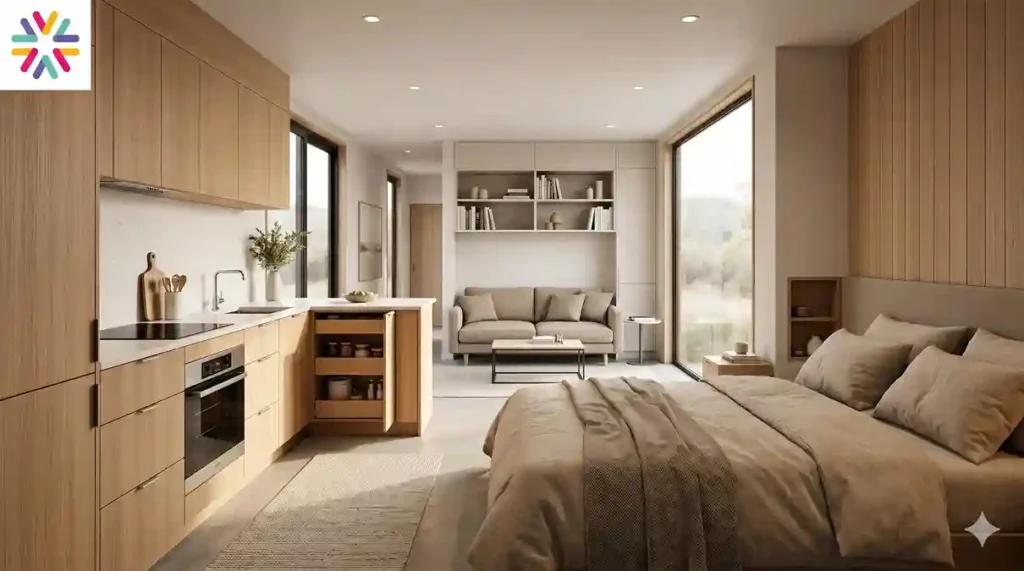
Tiny houses used to be defined by one famous feature: the sleeping loft. It looked clever, saved space, and became the signature image of minimalist living.
But in 2026, the trend is shifting. More U.S. homeowners, retirees, ADU buyers, and downsizers are choosing ground-floor bedroom tiny house layouts because they are safer, easier to live in, and better suited for real everyday life.
Quick Answer: Why Are Ground-Floor Bedroom Tiny Houses Trending?
- Ground-floor bedrooms are easier to access. They remove the need for ladders, steep stairs, and awkward loft climbing.
- No loft tiny homes for seniors are becoming more popular because they support aging in place, comfort, and long-term safety.
- Reverse loft tiny home plans use the upper level for storage, office space, or guest use instead of making it the main sleeping area.
- Modern tiny house buyers want practical layouts, not just viral designs. A beautiful loft may look good online but feel difficult in daily life.
- The 2026 tiny home market is becoming more mature. Buyers are asking for better bathrooms, real bedrooms, safer movement, and more flexible floor plans.
Ground Floor Bedroom Tiny House Layouts: What Is Changing in 2026?
The classic tiny house layout often placed the bedroom above the main living area. This design made sense when tiny homes were mostly promoted as ultra-compact, low-cost alternatives for young minimalists. A loft created separation without expanding the footprint.
But real-life tiny living has exposed the limits of that design. Many people do not want to climb a ladder at night. Many couples do not want a low-ceiling sleeping area where they cannot stand up. Older adults may find lofts unsafe. Families may need better privacy. Remote workers may want the loft for storage or a work zone instead of a bed.
This is why ground-floor bedroom designs are becoming one of the most important tiny house layout trends in 2026. Instead of forcing the bed into the loft, designers are placing the main bedroom on the first floor and using the rest of the home more intelligently.
These homes often include a main-floor bedroom at the rear, a compact but real bathroom, a galley kitchen, built-in storage, and a flexible living area. Some include a small loft, but the loft is no longer the main sleeping space. It may become seasonal storage, a reading nook, a guest zone, or a small workspace.
This design shift reflects a bigger change in the tiny home audience. Tiny homes are no longer only for people chasing an extreme minimalist lifestyle. They are also for retirees, single professionals, ADU owners, multigenerational families, first-time buyers, and people who want a smaller home without sacrificing basic comfort.
Why Traditional Tiny Houses Are Losing Their Appeal
Traditional tiny houses are not disappearing. They still work for some people, especially younger buyers, weekend users, and people who prioritize maximum floor space. But the idea that every tiny house needs a loft is becoming outdated.
The main issue is daily usability. A sleeping loft can feel charming during a tour, but the experience changes when someone has to use it every night. Climbing down a ladder in the dark is inconvenient. Making a bed in a tight loft is difficult. Low ceiling height can make the space feel cramped. Poor airflow can make sleeping uncomfortable.
There is also a safety concern. For older adults, people with knee or hip issues, pregnant women, children, or anyone recovering from an injury, loft access can become a real barrier. A home should become easier to use over time, not harder.
In 2026, more buyers are asking a practical question: “Can I live here comfortably five or ten years from now?” That question is pushing tiny house designers toward ground-floor bedrooms, wider pathways, safer bathrooms, better lighting, and more thoughtful storage.
“The best tiny homes of 2026 are not smaller for the sake of being small; they are smarter because every inch supports real life. RankAshva sees ground-floor bedrooms as the design move that turns tiny houses from clever concepts into lasting homes.”
Why This Matters Right Now in the United States
The rise of ground-floor bedroom tiny homes is connected to several major U.S. housing trends.
First, America is aging. More adults are planning for retirement, downsizing, and aging in place. A tiny home with a ladder-access loft may not match those needs. No loft tiny homes for seniors offer a more realistic path to smaller living without creating daily safety challenges.
Second, housing costs continue to shape consumer decisions. Tiny homes, backyard cottages, and ADUs are attractive because they can offer flexible living space at a lower cost than traditional new construction. But buyers are becoming more careful. They want homes that feel usable, not just affordable.
Third, multigenerational living is becoming more common. Families may use a tiny home as a backyard residence for a parent, adult child, caregiver, or guest. In those cases, a main-floor bedroom makes the unit more inclusive and comfortable for different ages.
Fourth, the tiny home industry is becoming more professional. Builders are paying closer attention to code, accessibility, storage, energy use, and resale value. A layout that supports long-term living has more market appeal than one that only looks impressive in photos.
Comparison: Loft Tiny Homes vs. Ground-Floor Bedroom Tiny Homes
| Feature | Traditional Loft Tiny House | Ground-Floor Bedroom Tiny House |
|---|---|---|
| Main Sleeping Area | Usually located in a loft above the living space | Located on the first floor for easy access |
| Best For | Younger buyers, weekend use, short-term stays | Full-time living, seniors, couples, ADUs, long-term comfort |
| Safety | May require ladders or steep stairs | Reduces climbing and nighttime fall risks |
| Comfort | Can feel cramped due to low ceiling height | Feels closer to a traditional bedroom |
| Storage Strategy | Loft is often used for sleeping | Loft or upper space can become storage or office space |
| Resale Appeal | May appeal to a narrower audience | Often appeals to more age groups and use cases |
Reverse Loft Tiny Home Plans: The Smarter Alternative
Reverse loft tiny home plans are one of the most interesting layout ideas for 2026. In a traditional design, the loft is the bedroom. In a reverse loft plan, the bedroom moves downstairs, and the upper space becomes secondary.
This small design decision changes the entire home. The main bedroom becomes easier to access. The loft becomes optional instead of essential. The homeowner can use it for storage, meditation, hobbies, books, seasonal items, or a compact office.
This is especially useful in tiny homes because storage is always a challenge. When the bed no longer consumes the upper level, the loft can handle items that do not need daily access. That keeps the main living area cleaner and more open.
Reverse loft planning also supports better sleep. A real ground-floor bedroom can have better airflow, easier temperature control, better lighting, and more normal movement around the bed. These details may sound small, but they make a major difference in full-time tiny living.
Modern Tiny House Layout Secrets Buyers Should Know
The best modern tiny house layout secrets are not about making a home look bigger in photos. They are about making the home work better every day.
Use zones, not clutter. A smart tiny home separates sleeping, cooking, bathing, working, and relaxing areas without needing full walls everywhere. Even small changes in flooring, lighting, furniture placement, or ceiling height can create a sense of order.
Choose furniture that works twice. A bench can hide storage. A dining table can become a desk. A sofa can convert into a guest bed. Built-ins usually work better than oversized freestanding furniture.
Keep the bathroom realistic. Tiny bathrooms often look simple on paper but feel tight in real life. A slightly larger bathroom with safe entry, strong ventilation, and smart shelving can make the entire home feel more livable.
Protect the bedroom from visual clutter. A ground-floor bedroom should feel calm. Sliding doors, curtains, pocket doors, or partial partitions can create privacy without making the home feel closed off.
Design for future mobility. Even if the buyer is young today, a no-loft plan can still be useful later. Life changes. Injuries happen. Guests vary. A single-level sleeping area makes the home more flexible.
Risks, Concerns, and Opposing Views
Ground-floor bedroom tiny homes are practical, but they are not perfect for every buyer. The biggest tradeoff is floor space. Moving the bedroom downstairs means the main level must work harder. The kitchen, living room, bathroom, storage, and bedroom all compete for the same footprint.
Some traditional tiny home fans argue that lofts are still the best way to maximize usable space. They are right in some cases. A loft can free the main level for a larger living area, better kitchen, or more open design. For younger owners or part-time users, that may be worth it.
There is also a cost issue. A more livable layout may require a longer trailer, wider foundation, better windows, improved insulation, or more custom cabinetry. A ground-floor bedroom can be more comfortable, but it may not always be the cheapest option.
Zoning and building rules also matter. Some jurisdictions treat tiny homes differently depending on whether they are on wheels, on a foundation, part of an ADU program, or classified as a park model. Buyers should not assume that a good floor plan automatically makes a home legal for full-time living.
What Readers Should Do Before Choosing a Tiny House Layout
Before choosing between a loft and a ground-floor bedroom, buyers should think beyond square footage.
- Imagine daily routines. Think about waking up at night, changing sheets, storing clothes, cooking, bathing, working, and hosting guests.
- Plan for health and mobility. A layout that works today should still feel safe if your needs change.
- Check local rules first. Tiny homes, ADUs, and backyard units are controlled by local zoning and building requirements.
- Visit real models if possible. A floor plan can look perfect online but feel very different in person.
- Prioritize storage early. Storage should be designed into the home, not added as an afterthought.
- Compare total value, not just price. A slightly larger or better-designed tiny home may be more useful for full-time living.
For beginners, the best test is simple: would this layout still feel comfortable on a tired day, during bad weather, or after a minor injury? If the answer is no, the design may be better for social media than real life.
Space Productive Living Hacks 2026: How to Make No-Loft Tiny Homes Work
Space productive living hacks for 2026 focus on making small homes feel efficient without making them feel crowded.
Use vertical storage where it is easy to reach. Add drawers under the bed. Choose pocket doors instead of swinging doors. Use wall-mounted lighting to free up table space. Select appliances that match your actual habits, not your dream kitchen. Keep walkways open. Build storage into stairs, benches, and platforms.
Another powerful strategy is flexible privacy. A small home does not need many rooms, but it does need moments of separation. Curtains, sliding panels, glass partitions, and built-in shelving can divide space while keeping the layout open.
Lighting also matters. Ground-floor bedroom layouts feel better when natural light is balanced across the home. A dark bedroom at the back can feel boxed in, while well-placed windows can make the room feel calm and comfortable.
Future Outlook: What Comes Next for Tiny House Design?
The future of tiny house design is likely to become more practical, accessible, and code-aware. The most successful designs will not simply shrink a traditional home. They will rethink how people move, sleep, store, work, and rest in a compact footprint.
Ground-floor bedroom tiny house layouts are likely to keep growing because they appeal to more buyers. Seniors, couples, remote workers, ADU owners, and long-term residents all benefit from easier access and more comfortable sleeping space.
Lofts will not vanish. Instead, their role will change. The loft may become a bonus area rather than the heart of the home. That shift will make tiny houses more flexible and more realistic for full-time living.
In 2026 and beyond, the winning tiny home will be less about dramatic minimalism and more about quiet intelligence: safer movement, better storage, real privacy, and layouts that respect how people actually live.
FAQ: Ground-Floor Bedroom Tiny House Layouts
Are ground-floor bedroom tiny houses better than loft tiny homes?
They are better for many full-time residents because they are easier to access, safer at night, and more comfortable for long-term living. Loft tiny homes may still work well for younger buyers or part-time use.
What are reverse loft tiny home plans?
Reverse loft tiny home plans place the main bedroom on the ground floor and use the loft for storage, office space, guests, or hobbies. This makes the sleeping area easier to access.
Are no loft tiny homes good for seniors?
Yes, no loft tiny homes for seniors can be a strong option because they reduce stair or ladder use and support aging in place. The best designs also include safe bathrooms, open walkways, and good lighting.
Do ground-floor bedrooms make tiny homes feel smaller?
They can reduce open floor space, but smart design can solve much of that problem. Built-in storage, flexible furniture, pocket doors, and clear zones help the home feel organized and spacious.
What is the best tiny house layout for 2026?
The best layout depends on the user, but many buyers now prefer a ground-floor bedroom, compact kitchen, realistic bathroom, flexible living area, and optional loft for storage or work.
Conclusion
Ground-floor bedroom designs are replacing traditional tiny houses because buyers are becoming more practical. They still want affordability, simplicity, and smart design, but they also want safety, comfort, and long-term usability.
The old tiny house dream was about fitting life into the smallest possible space. The new tiny house dream is about making small spaces work beautifully for real people. In that shift, the bedroom has become the most important design decision.
As an expert editorial opinion, RankAshva believes the future of tiny living belongs to homes that feel less like clever experiments and more like thoughtful, flexible, human-centered spaces built for everyday life.




More Stories
Why the U.S. Government Ordered Restrictions on Anthropic’s Claude Fable 5 and Mythos 5
PURSUE UFO Files: The Truth Behind the May 2026 Declassified Videos
Inside the Oval Office: How Silicon Valley Leaders Stopped the 2026 AI Executive Order