
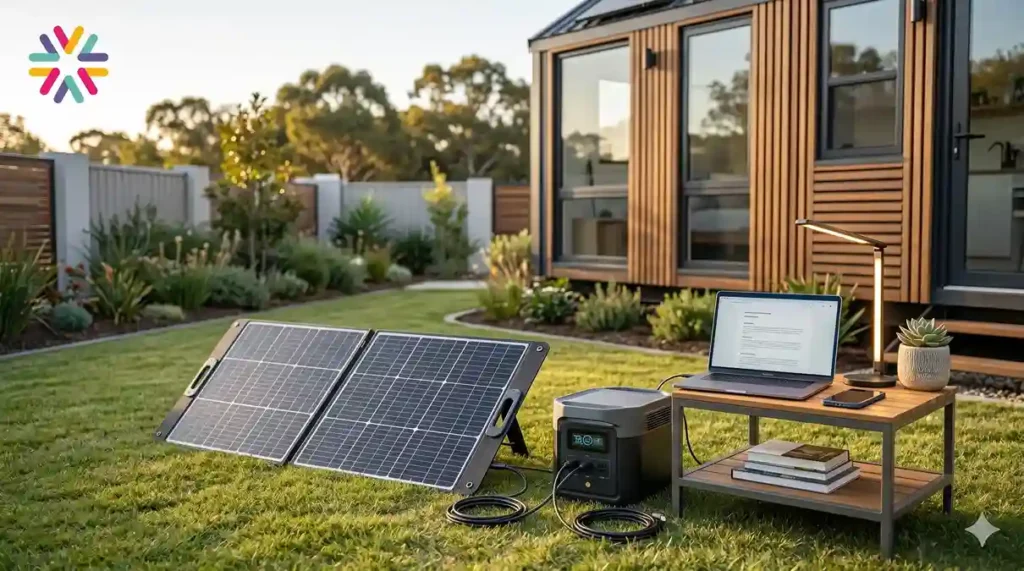
Portable solar generators are moving from camping gear to serious home backup tools. In 2026, more Americans are asking how these quiet battery-powered systems can help during outages, road trips, tiny-home living, and rising electricity costs.
The promise sounds simple: collect sunlight, store power, and use electricity when the grid is unavailable or expensive. But to get real value, beginners need to understand how solar generators work, what they can power, and how to size a system correctly.
Quick Answer: Portable Solar Generator Guide for Beginners
- A portable solar generator is a rechargeable battery system that stores electricity from solar panels, wall outlets, or car charging ports.
- It does not “generate” power like a gas generator. It stores power and delivers it through AC outlets, USB ports, and DC outputs.
- The main parts are solar panels, a charge controller, battery, inverter, and output ports.
- To choose the right size, calculate your off-grid power needs by listing devices, watts, hours of use, and battery capacity.
- Solar generators are best for essentials such as phones, laptops, lights, routers, fans, CPAP machines, small refrigerators, and tiny-home appliances.
How Do Solar Generators Work for Beginners?
A portable solar generator works by turning sunlight into usable stored electricity. Solar panels collect energy from the sun and convert it into direct current electricity. That power flows into the generator’s battery through a charge controller, which manages charging safely and efficiently.
Once the power is stored, the generator can deliver electricity in different ways. USB ports can charge phones and tablets. DC ports can power certain low-voltage appliances. Standard AC outlets use an inverter to convert stored DC power into the type of electricity used by common household devices.
This is why the word “generator” can be confusing. A gas generator creates electricity by burning fuel. A portable solar generator stores electricity in a battery and refills that battery through solar panels or another charging source. It is quieter, cleaner, and safer for indoor use than fuel-powered equipment, but it is also limited by battery size and sunlight availability.
In 2026, this category is trending because people want flexible backup power without noise, fumes, fuel storage, or complicated installation. Portable solar generators are especially popular among renters, tiny-home owners, van-life users, emergency-preparedness families, and homeowners who want a simple backup option before investing in a full home battery system.
Why Portable Solar Power Is Trending in the United States
Several forces are pushing portable solar generators into the mainstream. Electricity prices are rising in many parts of the United States, and households are paying closer attention to energy use. At the same time, storms, wildfires, heat waves, and grid stress have made backup power feel less optional than it once did.
Consumers are also becoming more practical about energy independence. Not everyone can install rooftop solar. Renters may not control their roof. Tiny-home owners may need a compact power system. Homeowners may want backup power without a major construction project. Portable solar generators offer a middle path.
Technology has also improved. Modern units often use lithium iron phosphate batteries, better known as LiFePO4 or LFP batteries. These batteries are popular because they generally offer long cycle life, strong stability, and better everyday durability than older battery options. Many systems also include app monitoring, fast charging, expandable battery packs, and higher-output inverters.
The result is a new kind of power planning. Instead of thinking only about full-home backup, many people are building “essential power setups.” They want enough electricity to keep phones charged, food cold, internet running, lights on, medical devices powered, and small appliances working during an outage.
“The smartest energy trend of 2026 is not about escaping the grid completely; it is about building confidence when the grid becomes uncertain. RankAshva sees portable solar generators as a practical bridge between modern convenience and real energy resilience.”
Main Parts of a Portable Solar Generator
Understanding the parts makes the whole system easier to choose.
Solar panels collect sunlight and send electricity to the generator. Portable panels are usually foldable or suitcase-style, while tiny homes may use rigid roof-mounted panels.
The charge controller manages the power coming from the panels. It protects the battery from unsafe charging and helps improve charging efficiency.
The battery stores electricity for later use. Battery capacity is usually measured in watt-hours. A 1,000Wh battery can theoretically supply 1,000 watts for one hour, 100 watts for 10 hours, or 50 watts for 20 hours, before accounting for efficiency losses.
The inverter converts DC battery power into AC household power. This matters if you want to run devices such as laptops, small refrigerators, televisions, coffee makers, or kitchen appliances.
Output ports allow you to plug in devices. A good portable power station usually includes AC outlets, USB-A, USB-C, DC ports, and sometimes a car-style outlet.
How to Calculate Off Grid Power Needs
The most common beginner mistake is buying a solar generator based only on price or popularity. The better approach is to calculate your off-grid power needs before choosing a system.
Start by listing the devices you want to run. Then find each device’s watt rating. Multiply watts by hours of use to estimate watt-hours.
For example, a 10-watt LED light used for five hours needs about 50Wh. A 60-watt laptop used for four hours needs about 240Wh. A 100-watt mini fridge running for eight total compressor hours may need about 800Wh. A phone may need only 10 to 20Wh per full charge.
After you add everything together, include extra capacity for inverter losses, cloudy weather, battery protection, and unexpected use. Many beginners should add at least 20% to 30% more capacity than their basic estimate.
A simple emergency setup may only need 500Wh to 1,000Wh. A stronger family outage setup may need 1,500Wh to 3,000Wh. A tiny home or cabin may require several kilowatt-hours of battery storage, especially if it runs refrigeration, water pumps, fans, cooking appliances, or heating and cooling equipment.
Comparison Table: Portable Solar Generator Options
| Setup Type | Typical Battery Size | Best For | Limitations | Buyer Tip |
|---|---|---|---|---|
| Small Portable Unit | 250Wh to 700Wh | Phones, laptops, lights, Wi-Fi router, camping | Not ideal for refrigerators or long outages | Choose USB-C fast charging and lightweight design |
| Medium Backup Unit | 1,000Wh to 2,000Wh | Small fridge, fan, medical device, work-from-home backup | Limited runtime for high-watt appliances | Check inverter wattage and solar input speed |
| Expandable Solar Generator | 2,000Wh to 6,000Wh+ | Family backup, tiny homes, cabins, longer outages | Higher cost and heavier equipment | Look for expandable batteries and strong safety certifications |
| Tiny Home Solar Battery Setup | 5kWh to 15kWh+ | Off-grid living, ADUs, cabins, daily use | May require professional design and permits | Plan panels, battery, inverter, and load management together |
| Gas Generator Alternative | Varies by battery system | Quiet backup power without fumes or fuel storage | Cannot recharge instantly without sun or grid power | Keep expectations realistic for heavy appliances |
Best Solar Batteries for Tiny Homes 2026: What to Look For
For tiny homes, the best solar batteries in 2026 are usually the ones that balance safety, capacity, lifespan, and expandability. Many buyers now prefer LiFePO4 batteries because they are known for long cycle life and strong thermal stability compared with many older lithium chemistries.
Battery capacity matters, but it is not the only number to watch. Tiny-home owners should also check maximum output, solar input capacity, charging speed, warranty, battery management system quality, temperature operating range, and whether the system can expand later.
A tiny home with basic lighting, phone charging, a laptop, water pump, and small fridge may need far less power than a tiny home with electric cooking, air conditioning, electric heat, washer-dryer use, or large entertainment devices. Heating and cooling are usually the biggest challenge. Electric space heaters, portable air conditioners, induction cooktops, and microwaves can drain small batteries quickly.
For serious tiny-home living, a portable solar generator may be part of the solution, but it may not replace a properly designed solar-plus-storage system. The more permanent the home, the more important it becomes to consider electrical codes, safe installation, ventilation, battery placement, and professional guidance.
Zero Bill Living Setup USA: Promise vs. Reality
The phrase “zero bill living setup USA” is popular because it sounds like full freedom from utility bills. In reality, zero-bill living is possible for some people, but it requires careful planning, the right climate, enough solar panels, proper battery storage, efficient appliances, and disciplined energy use.
For most Americans, a portable solar generator is better understood as a bill-reduction and resilience tool, not a magic replacement for the grid. It can charge small devices for free after the system is paid for. It can reduce generator fuel costs. It can support off-grid weekends or emergency backup. But it will not automatically eliminate a full household electric bill.
The most realistic approach is to define your goal. Do you want emergency backup for essentials? Lower daily power use? Off-grid camping comfort? Tiny-home independence? A full zero-bill strategy? Each goal requires a different system size and budget.
Risks, Concerns, and Opposing Views
Portable solar generators are useful, but buyers should understand their limits.
The first concern is overselling. Some marketing makes small power stations look like they can run an entire home. In practice, battery capacity and inverter output limit what they can handle. A small unit may charge devices beautifully but fail with a microwave, heater, sump pump, or air conditioner.
The second concern is weather. Solar charging depends on sunlight, panel angle, season, shading, and local climate. A generator that recharges quickly in full sun may charge slowly on a cloudy winter day.
The third concern is safety. Battery systems should be used according to manufacturer instructions. Avoid overloading outlets, using damaged cables, placing batteries in extreme heat, or connecting systems in unsafe ways. Larger home-integrated systems may require permits and licensed professionals.
The fourth concern is cost. A quality expandable solar generator can be expensive. For some households, a smaller emergency unit is a smart purchase. For others, rooftop solar with battery storage or a professionally installed home backup battery may offer better long-term value.
What Readers Should Do Before Buying
Begin with your power list. Write down what you need during an outage or off-grid trip. Separate essentials from comfort items. Essentials may include phones, lights, internet, medical devices, refrigeration, fans, and communication tools.
Next, calculate watt-hours. Do not guess. Look at device labels, charger ratings, or appliance manuals. Then choose a generator with enough battery capacity and inverter output for those needs.
Check solar input. A large battery with weak solar input can take too long to recharge. If you want true off-grid use, solar panel compatibility matters as much as battery size.
Think about portability. A heavy power station may offer more capacity but may not be easy to move. Wheels, handles, modular batteries, and storage space all matter.
Review safety and warranty details. Look for reputable brands, clear specifications, battery management protections, and customer support. For tiny homes or home backup, ask whether the system meets the standards required in your area.
Future Outlook: Off-Grid Power After 2026
The future of portable solar generators is likely to be more powerful, more modular, and more connected. Batteries are improving, solar panels are becoming more efficient, and consumers are becoming more comfortable managing their own energy.
Expect more systems designed for renters, apartment dwellers, tiny homes, RVs, and emergency backup. Balcony solar, plug-in storage, portable battery expansion, and smart energy monitoring may become more common as households search for flexible power options.
At the same time, the market will need clearer education. Buyers will want honest information about runtime, charging speed, battery life, safety, and realistic appliance use. The winners will be systems that make power planning simple instead of confusing.
FAQ: Portable Solar Generator Guide
How do solar generators work for beginners?
Solar generators store electricity in a battery. Solar panels recharge the battery, and an inverter converts stored power into household-style electricity for common devices.
Can a portable solar generator run a refrigerator?
Yes, many medium or large units can run a refrigerator, but runtime depends on battery capacity, refrigerator efficiency, outdoor temperature, and how often the compressor runs.
How do I calculate off-grid power needs?
Multiply each device’s watts by the number of hours you plan to use it. Add the totals, then include extra capacity for efficiency losses and cloudy weather.
Are portable solar generators safe indoors?
Battery-powered solar generators do not produce exhaust like gas generators, so they are generally suitable for indoor use when operated according to instructions. They should still be kept dry, ventilated, and away from extreme heat.
Can portable solar generators create a zero electric bill?
They can help reduce some energy use, but a true zero-bill setup usually requires a larger solar-plus-storage system, efficient appliances, good sunlight, and careful energy management.
Conclusion
Portable solar generators work by storing solar energy in a battery and delivering it when you need power. For beginners, the key is not buying the biggest or most popular model. The key is matching your system to your real energy needs.
In 2026, these systems matter because Americans want backup power that is quiet, clean, flexible, and easier to manage. They can help during outages, support tiny homes, improve camping comfort, and make emergency planning more practical.
As an expert editorial opinion, RankAshva believes the smartest off-grid power strategy is not chasing total independence overnight, but building a reliable, well-sized setup that protects daily essentials first and grows with real-life needs.




More Stories
Why the U.S. Government Ordered Restrictions on Anthropic’s Claude Fable 5 and Mythos 5
PURSUE UFO Files: The Truth Behind the May 2026 Declassified Videos
Inside the Oval Office: How Silicon Valley Leaders Stopped the 2026 AI Executive Order