America is not running out of technology. It is running out of attention.
Between endless notifications, streaming queues, social feeds, work apps, and viral home trends, many people are realizing that convenience has quietly become clutter. That is why the digital detox is evolving in 2026 from a weekend break into a practical lifestyle system built around calmer routines, smarter homes, and the growing appeal of the JOMO lifestyle.
Quick Answer: What Is the 2026 Digital Detox Trend?
- A digital detox in 2026 is not about quitting technology. It is about using technology with clearer boundaries.
- The JOMO lifestyle, or Joy of Missing Out, is replacing FOMO by making offline time feel valuable, not restrictive.
- Smart home automation can help reduce screen time by removing small daily decisions and repeated phone checks.
- IFTTT productivity hacks are useful for simple routines such as lights, reminders, cleaning schedules, and focus cues.
- TikTok cleaning hacks can save time, but the best ones should be tested for safety, practicality, and long-term value.
Why Digital Detox Is Becoming a Mainstream Life Hack in 2026
The old idea of a digital detox was simple: turn off your phone and take a break. That still helps, but it is no longer enough for most people. In 2026, the bigger problem is not just screen time. It is the way screens have become attached to every small action: checking the weather, adjusting lights, ordering groceries, tracking chores, watching cleaning videos, replying to work messages, and scrolling while trying to relax.
This is why the new digital detox looks more like a home productivity strategy than a wellness challenge. People want fewer pings, fewer decisions, fewer open tabs, and fewer moments where they pick up the phone for one reason and lose twenty minutes to another.
The shift from FOMO to JOMO is central to this trend. FOMO makes people feel anxious about missing a message, a sale, a post, a trend, or a social moment. JOMO does the opposite. It turns missing out into a deliberate choice. It says that not every update deserves your attention, not every trend needs your participation, and not every free minute needs to be filled by a screen.
For U.S. readers, this matters because daily life is now deeply blended with digital platforms. Work, shopping, entertainment, social life, school, home management, and personal finance all happen through devices. A realistic digital detox cannot pretend those tools do not exist. Instead, it must make them less invasive.
The Rise of the JOMO Lifestyle
The JOMO lifestyle is not anti-social or anti-technology. It is a response to overstimulation. It is the feeling of choosing a quiet evening, a clean kitchen, a book, a walk, a focused work block, or a phone-free dinner without feeling behind.
In 2026, JOMO is gaining traction because people are tired of “always on” living. More Americans are looking for offline rituals that feel tangible: printed books, paper planners, punch-card habit trackers, handwritten lists, home reset routines, and phone-free meals. These habits work because they create visible progress without requiring another app.
JOMO also fits naturally with home productivity. A calmer home is easier to maintain. A cleaner schedule is easier to follow. A quieter phone makes it easier to sleep, cook, read, clean, exercise, and connect with people in the same room.
The key insight is simple: digital detox works best when it is designed into your environment. You should not have to rely on willpower every time your phone lights up. Your home, routines, and devices should support the behavior you want.
How Smart Home Automation Supports a Digital Detox
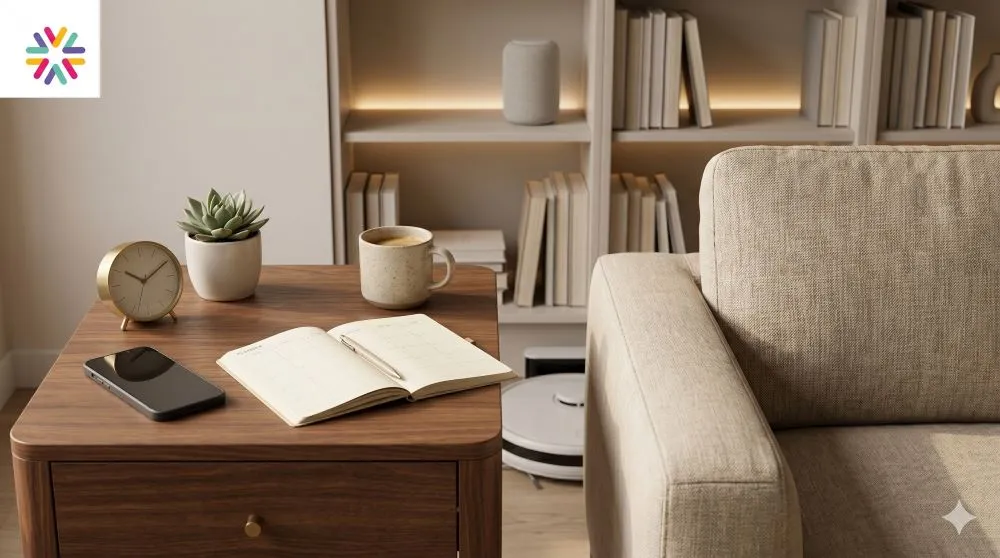
Smart home automation may sound like the opposite of a digital detox, but used carefully, it can reduce the need to touch your phone. The goal is not to add more gadgets. The goal is to remove repetitive digital friction.
For example, instead of opening an app every night to dim the lights, you can schedule your lights to warm automatically at 8:30 p.m. Instead of checking your phone for reminders, you can use a smart speaker to announce a short evening reset. Instead of scrolling while deciding what to clean, you can set a recurring cleaning routine that triggers at the same time every week.
This is where IFTTT productivity hacks can be helpful. IFTTT, short for “If This Then That,” connects simple triggers with simple actions. It is best for easy personal automations, not complex business workflows. For beginners, its value is that it helps make routines automatic.
Useful examples include:
- Turn on warm lights when your evening wind-down time begins.
- Send a reminder to start a 10-minute kitchen reset after dinner.
- Log completed cleaning routines in a spreadsheet or notes app.
- Mute nonessential notifications during focus hours.
- Trigger a smart plug to turn off distracting devices at bedtime.
The best smart home setup for a digital detox is intentionally boring. It should make your home calmer, not more complicated. If a device requires constant app checking, frequent troubleshooting, or too many alerts, it may be working against your goal.
Digital Detox and Smart Home Automation: What Works Best?
| Approach | Best For | Main Benefit | Possible Risk | Smart 2026 Upgrade |
|---|---|---|---|---|
| Traditional digital detox | Short breaks from devices | Quick mental reset | Hard to maintain after the break ends | Use scheduled screen-free blocks instead of all-or-nothing breaks |
| JOMO lifestyle | Long-term attention control | Reduces pressure to keep up with everything | Can feel isolating if taken too far | Protect meaningful social time while cutting low-value scrolling |
| Smart home automation | Reducing repeated decisions | Makes good habits easier to repeat | Privacy and security concerns | Use fewer devices, stronger passwords, and clear privacy settings |
| IFTTT productivity hacks | Simple home routines | Connects apps and devices without coding | Not ideal for complex or urgent automations | Use it for reminders, lighting, cleaning cues, and habit tracking |
| TikTok cleaning hacks | Fast inspiration and motivation | Makes chores feel easier to start | Some hacks are unsafe, ineffective, or overhyped | Test small, avoid risky chemical mixes, and keep what truly saves time |
Why This Matters Right Now in the United States
The digital detox trend is especially relevant in the United States because many households are dealing with the same three pressures at once: screen-heavy work, expensive time, and overloaded homes.
Remote and hybrid work have made home a workplace for millions of people. That creates convenience, but it also makes it harder to separate work time from personal time. A laptop on the table, a phone beside the bed, and a constant stream of messages can make the home feel less restful.
At the same time, Americans are looking for practical productivity solutions that do not require expensive systems or complicated routines. This explains why TikTok cleaning hacks, analog habit trackers, Sunday resets, smart plugs, robot vacuums, and automated reminders have become part of the same conversation. They all promise the same thing: less friction.
But the strongest version of this trend is not about chasing every viral idea. It is about combining the best parts of each movement. Use digital detox principles to protect attention. Use JOMO to reduce social pressure. Use smart home automation to simplify repeat tasks. Use cleaning hacks only when they are safe and genuinely useful.
TikTok Cleaning Hacks: Helpful Shortcut or Productivity Trap?
TikTok cleaning hacks are popular because they make household tasks feel visual, fast, and satisfying. A greasy pan becomes shiny in seconds. A messy fridge becomes color-coded. A neglected closet becomes a weekend transformation. These videos can be motivating, especially for people who struggle to begin chores.
However, not every viral cleaning idea is worth copying. Some hacks use too many products, require unrealistic effort, or create a new mess after solving an old one. Others may involve unsafe chemical combinations or techniques that can damage surfaces.
A better approach is to treat TikTok cleaning hacks like experiments, not instructions. Ask four questions before trying one:
- Does this actually save time?
- Is it safe for the surface, appliance, or fabric?
- Does it require products I will use again?
- Will this make my routine easier next week, not just today?
The most useful cleaning hacks are usually simple: keeping a donation bin near the closet, wiping the sink after brushing your teeth, using a timer for a 10-minute reset, placing cleaning supplies where the mess happens, and batching small chores into repeatable routines.
“The smartest home of 2026 is not the one with the most devices; it is the one that protects your attention, simplifies your routines, and gives you back the quiet confidence of choosing what matters.”
Risks, Concerns, and Opposing Views
A balanced digital detox plan should also acknowledge the downsides. First, technology is not the enemy. For many people, phones and smart devices support work, safety, accessibility, caregiving, navigation, and connection. A strict detox can be unrealistic or even stressful if it cuts off tools people genuinely need.
Second, smart home automation brings privacy concerns. Connected devices may collect data about routines, voice commands, location, energy use, movement, and household behavior. Security settings matter. A helpful device can become a liability if it uses weak passwords, outdated software, or unclear data-sharing practices.
Third, JOMO can be misunderstood. Missing out can be healthy when it protects rest and focus. But avoiding everything can become isolation. The goal is not to disappear from life. The goal is to participate more intentionally.
Finally, productivity hacks can become another form of pressure. If every corner of the home needs a system, every habit needs a tracker, and every routine needs automation, the solution becomes as exhausting as the problem. The best life hacks are the ones you can actually maintain.
What Readers Should Do: A Beginner-Friendly 2026 Digital Detox Plan
Start small. A successful digital detox does not require deleting every app or buying a drawer full of smart devices. Begin with the places where your attention leaks the most.
1. Create one phone-free zone
Choose the bedroom, dining table, bathroom, or home office. Keep the rule simple: no scrolling in that space. This builds a physical boundary that your brain can understand.
2. Set a nightly screen sunset
Pick a time when your phone becomes less useful. Turn on Do Not Disturb, dim smart lights, and move entertainment apps off your home screen. The goal is to make bedtime feel like a routine, not a negotiation.
3. Use automation for cues, not control
Automate small signals: lights dimming, a reminder to stretch, a cleaning timer, or a smart speaker announcing a shutdown routine. Avoid automations that create more alerts.
4. Replace scrolling with visible progress
Try a paper checklist, punch card, wall calendar, or simple notebook. Physical tracking works because it gives you a clear sense of completion without pulling you into another app.
5. Audit your cleaning content
If cleaning videos motivate you, use them carefully. Save only the hacks that are safe, affordable, and repeatable. Unfollow accounts that make your home feel constantly inadequate.
6. Reduce notification layers
Turn off nonessential alerts from shopping apps, games, social platforms, and news apps. Keep calls, calendar alerts, security notifications, and important family contacts. Most notifications are not urgent; they are invitations to re-enter the feed.
7. Build a weekly JOMO ritual
Pick one recurring offline habit: Saturday morning cleaning, Sunday meal prep, Friday board games, a daily walk, or reading before bed. Protect it like an appointment.
Future Outlook: What Comes Next
In 2026 and beyond, the digital detox movement will likely become more practical and less performative. Instead of dramatic “I quit my phone” challenges, more people will build quiet systems that reduce screen time without cutting off modern life.
Expect more phone-free venues, more analog productivity tools, more smart home routines focused on wellness, and more consumer interest in privacy-friendly devices. Cleaning content will also mature. The most trusted creators will not just show satisfying results; they will explain safety, cost, time saved, and what is actually worth repeating.
AI may also change the digital detox conversation. As more apps become personalized and more devices become predictive, attention boundaries will matter even more. The future home will need to be smart enough to help, but restrained enough to stay out of the way.
FAQ: Digital Detox, JOMO, and Smart Home Hacks
What is a digital detox?
A digital detox is a planned reduction in screen use, notifications, and digital distractions. In 2026, it is less about quitting technology and more about creating healthier boundaries around phones, apps, and connected devices.
What does JOMO mean?
JOMO means Joy of Missing Out. It describes the positive feeling of choosing rest, focus, offline activities, or meaningful connection instead of constantly keeping up with online updates.
Can smart home automation really reduce screen time?
Yes, when used carefully. Smart home automation can reduce screen time by handling repeated tasks such as lighting schedules, reminders, focus cues, and cleaning routines. The key is to automate habits without adding unnecessary alerts.
Are IFTTT productivity hacks good for beginners?
IFTTT productivity hacks are good for beginners because they are simple and usually do not require coding. They work best for basic routines, such as turning devices on or off, sending reminders, logging habits, and connecting smart home tools.
Are TikTok cleaning hacks safe?
Some TikTok cleaning hacks are useful, but not all are safe or effective. Avoid mixing cleaning chemicals, test products on small areas first, and keep only the hacks that save time without damaging surfaces or creating extra work.
Conclusion: The Best Digital Detox Is a Better-Designed Life
The move from FOMO to JOMO is not a rejection of modern life. It is a smarter way to live with it. A strong digital detox in 2026 combines simple boundaries, intentional routines, safer smart home automation, useful IFTTT productivity hacks, and a careful approach to TikTok cleaning hacks.
As a RankAshva editorial opinion, the real opportunity is not to own more technology or abandon it completely. It is to design a home where technology quietly supports your priorities, your attention feels protected, and missing out finally feels like gaining something back.



More Stories
100 Non-Negotiable Rules for Men
Salvaging Wardrobes: The Definitive Guide to Removing Set-In Grease Stains After Washing
Restoring Clarity: How to Clean Oven Glass With Baking Soda Without Harsh Chemical Sprays