
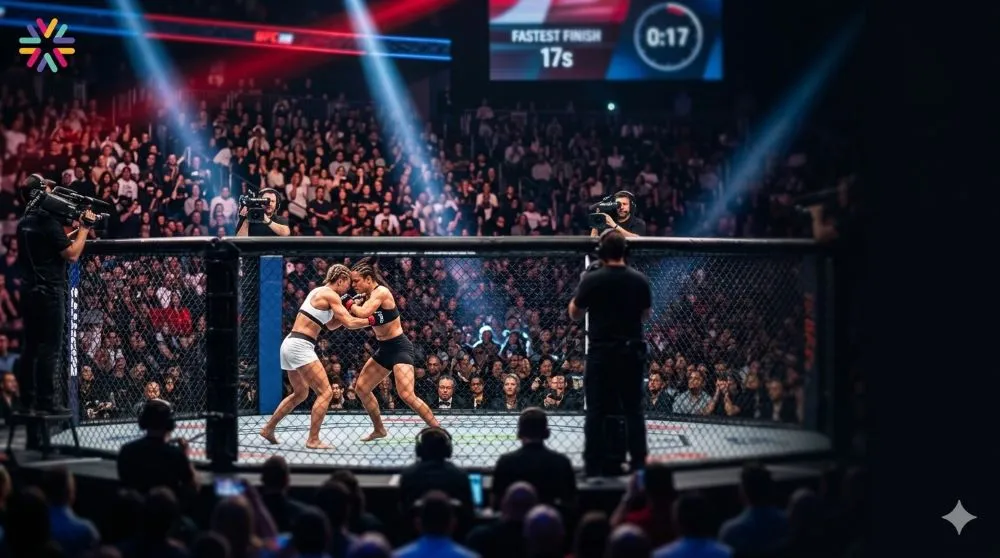
Seventeen seconds is barely enough time to refresh a screen. But that was all Ronda Rousey needed to turn Netflix’s first major MMA moment into one of the biggest entertainment stories of 2026.
The Ronda Rousey vs Gina Carano Netflix fight was short, dramatic, and instantly viral. More importantly, it showed why streaming live sports may now be one of the most powerful forces in entertainment.
Quick Answer: Why Did Ronda Rousey vs Gina Carano Break Through?
- Ronda Rousey defeated Gina Carano in 17 seconds by first-round armbar submission at MVP MMA 1.
- Netflix MMA viewership 2026 numbers were massive, with the event reportedly peaking near 17 million global viewers.
- The fight worked because it combined nostalgia, celebrity, live sports, and streaming access in one easy-to-watch event.
- MVP MMA 1 proved that non-UFC MMA can attract mainstream attention when packaged like premium entertainment.
- The result may push Netflix and other platforms deeper into streaming live sports, including combat sports and special events.
Netflix MMA Viewership 2026: What Happened at MVP MMA 1?
MVP MMA 1 was promoted by Most Valuable Promotions and streamed live on Netflix from the Intuit Dome in Los Angeles. The main event brought together two of the most recognizable names in women’s MMA history: Ronda Rousey and Gina Carano.
For longtime fight fans, the matchup carried a strong sense of legacy. Carano helped bring women’s MMA into mainstream awareness before the UFC fully embraced female fighters. Rousey later became the sport’s biggest crossover star and helped turn women’s MMA into a major commercial attraction.
That history made the fight more than a standard comeback bout. It was promoted as a meeting between two pioneers from different eras of the same movement.
Then the fight started, and it was over almost immediately.
Rousey shot forward, forced the fight to the ground, escaped danger, moved into position, and locked in her signature armbar. The official result was Ronda Rousey defeating Gina Carano by submission at 17 seconds of the first round.
For some viewers, the ending was thrilling. For others, it was too fast to feel satisfying. But from an entertainment perspective, the short finish may have made the event even more powerful. It created a clean, shareable moment that was easy to clip, explain, and debate.
Why the 17-Second Finish Went Viral
Sports moments become viral when they are simple enough for everyone to understand. This one was as simple as it gets: Ronda Rousey returned after years away and won in 17 seconds with the move that made her famous.
The fight had built-in storytelling. Rousey was not just another athlete returning to competition. She was a former UFC champion, Olympic medalist, WWE star, and mainstream celebrity. Carano was not just another opponent. She was one of the original faces of women’s MMA and a figure whose career moved from fighting to Hollywood and controversy.
That mix gave the fight several audiences at once. MMA fans wanted to see the sporting result. Casual viewers wanted the spectacle. Netflix users could watch without buying a separate pay-per-view. Social media users had an instant talking point.
The short finish also made the moment feel historic. In a crowded media world, a 17-second fight is not a weakness for attention. It is a headline machine.
How Netflix Turned MMA Into Mainstream Entertainment
The most important part of MVP MMA 1 was not just who fought. It was how the event reached people.
Traditional fight business has often depended on pay-per-view, cable deals, sports networks, and hardcore fan communities. Netflix changed that experience by placing a major combat sports event inside an app that millions of households already use.
That matters because friction changes behavior. A casual fan may not pay extra for an MMA event. But if the event is already available inside Netflix, the decision becomes much easier. People can sample it, watch with friends, or tune in because the platform itself creates visibility.
This is why streaming live sports has become such a major entertainment battleground. Platforms do not just want movies and scripted shows. They want live events that create urgency, social conversation, and appointment viewing.
Netflix has already moved into live comedy, wrestling, boxing, football, and other event programming. MVP MMA 1 shows that MMA can also fit into that strategy when the card has enough star power and a clear story.
Why This Matters Right Now
The United States entertainment market is changing fast. Audiences are watching less traditional television, but they still gather around big live moments. Sports and combat events remain valuable because they are unpredictable and difficult to replace with short-form clips alone.
For Netflix, live sports offer something scripted entertainment cannot always deliver: urgency. A series can be watched later. A live fight feels like something viewers need to see as it happens.
For MMA, the event raises a bigger question. Can a new promotion build major attention outside the UFC if it has a streaming partner, celebrity names, and smart storytelling?
MVP MMA 1 does not answer that question completely, but it proves the model has potential. One successful event does not create a league. But it can create leverage, curiosity, and a new business conversation.
For fans, the result is also important. More competition could mean more fighter opportunities, more creative matchmaking, and more accessible events. It could also create more spectacle-driven fights that prioritize attention over rankings.
Comparison Table: Why MVP MMA 1 Worked Differently
| Model | How It Works | Main Strength | Main Risk | Why It Matters |
|---|---|---|---|---|
| Traditional Pay-Per-View MMA | Fans pay separately to watch major fight cards. | High revenue from committed fans. | Casual viewers may avoid extra cost. | Works well for established stars and title fights. |
| Cable Sports Broadcast | Events air through sports networks and cable packages. | Reliable sports audience and familiar format. | Younger viewers may not use cable. | Still valuable, but less dominant than before. |
| Netflix Live Sports Event | Subscribers access the event inside an existing streaming platform. | Lower friction and broader entertainment reach. | Requires strong stars and stable live technology. | Can turn a fight into a mainstream cultural moment. |
| Influencer-Driven Combat Sports | Promoters use personality, social media, and spectacle to drive interest. | Strong viral potential and younger audience appeal. | May face criticism from traditional fight fans. | Can expand combat sports beyond hardcore audiences. |
The Business Lesson Behind the Fight
The Ronda Rousey vs Gina Carano Netflix event shows that modern sports entertainment is not only about the best matchup on paper. It is about the clearest story.
Rousey versus Carano had a clear story. Two pioneers. Two comebacks. One historic platform. A live global audience. A finish that arrived before viewers had time to settle in.
That clarity is valuable. In entertainment, audiences respond when they immediately understand why something matters. MVP MMA 1 did not need every viewer to know current MMA rankings. It needed them to understand the stakes emotionally.
This is the same logic that has helped celebrity boxing and crossover events grow. People may not follow every technical detail, but they understand legacy, rivalry, comeback, and risk.
The difference here is that MVP MMA 1 was not only a novelty event. It also included major combat sports names such as Nate Diaz, Mike Perry, Francis Ngannou, and Philipe Lins. That helped the card feel bigger than one viral main event.
Risks, Concerns, and Opposing Views
The success of MVP MMA 1 does not mean everyone loved it. Some fight fans criticized the event as too spectacle-focused. A 17-second main event can feel exciting, but it can also leave viewers wanting more competitive drama.
There is also a sporting concern. If streaming platforms chase only celebrity names, MMA could become more about nostalgia than current elite competition. That might attract casual viewers but frustrate fans who care about rankings, divisions, prospects, and championship stakes.
Another concern is athlete safety. Comeback fights involving older or long-inactive athletes can create questions about preparation, matchmaking, and long-term health. Even when fighters are medically cleared, audiences and regulators will continue to debate how far nostalgia should go.
There are business risks too. A record-setting first event is difficult to repeat. MVP MMA now faces the challenge of proving it can build a sustainable fight product, not just one viral night.
Netflix also has to maintain trust in live-stream quality. Live sports audiences are less forgiving than scripted-series audiences. Buffering, delays, or technical issues can damage the experience quickly.
What Readers Should Do Next
If you are a casual entertainment fan, the main takeaway is simple: live sports are becoming a bigger part of streaming. You should expect more major events to appear on platforms you already use.
If you are an MMA fan, watch how MVP builds its next cards. One event with Rousey and Carano can draw attention, but long-term credibility will depend on matchmaking, fighter development, production quality, and whether the promotion can create fresh stars.
If you are a media or business observer, MVP MMA 1 is worth studying as a case in modern attention. The event combined legacy athletes, platform distribution, social media conversation, and live-event urgency in a way that many entertainment companies will try to copy.
And if you are simply following the headline, remember this: the 17-second finish is only part of the story. The bigger story is that Netflix made MMA feel like a mainstream entertainment event, not just a fight-night product.
Future Outlook: What Happens After MVP MMA 1?
The next move will matter more than the first win. MVP now has attention, but attention is temporary unless it becomes habit.
Expect the promotion to explore more crossover fights, more retired or semi-retired names, and possibly partnerships with established MMA organizations. That could help MVP access fighters without immediately building a full roster from scratch.
Netflix may also test whether MMA can become a recurring live-event property. The platform does not need to replace the UFC to win. It only needs enough major nights to keep subscribers engaged and keep Netflix at the center of cultural conversation.
The UFC will remain the sport’s dominant brand, but MVP MMA 1 proved there may be room for a different kind of MMA product: less weekly grind, more global spectacle, and more entertainment-first packaging.
The challenge is balance. Too much spectacle can weaken sporting credibility. Too much traditional structure can reduce casual interest. The winner will be the company that can combine both.
FAQ: Ronda Rousey vs Gina Carano Netflix
Who won Ronda Rousey vs Gina Carano on Netflix?
Ronda Rousey defeated Gina Carano by armbar submission 17 seconds into the first round at MVP MMA 1.
How many people watched MVP MMA 1 on Netflix?
MVP reported that the Rousey vs Carano fight peaked near 17 million global viewers, while the triple-main card averaged 12.4 million viewers worldwide.
Why is Netflix MMA viewership 2026 important?
Netflix MMA viewership 2026 is important because it shows how a streaming platform can turn a live combat sports event into a major entertainment moment without relying on traditional pay-per-view.
Was MVP MMA 1 Netflix’s first MMA event?
Yes, MVP MMA 1 was presented as Netflix’s first live MMA event in partnership with Most Valuable Promotions.
Will Ronda Rousey fight again after beating Gina Carano?
Rousey has repeatedly framed the fight as a final chapter, so another return is uncertain. The larger question may be whether she stays involved with MMA in a promotional or storytelling role.
Conclusion
Ronda Rousey’s 17-second win over Gina Carano was more than a quick submission. It was a signal that the live sports business is changing.
Netflix did not just stream a fight. It delivered a mainstream entertainment event built around nostalgia, celebrity, accessibility, and viral simplicity. MVP MMA 1 may not replace traditional MMA, but it showed that there is a powerful audience for combat sports when the story is clear and the platform is easy to access.
“RankAshva sees Rousey’s 17-second Netflix moment as more than a comeback highlight; it is a blueprint for the next era of live entertainment, where platform power and cultural timing can turn one fight into a global event.”
The future of MMA will still depend on fighters, stakes, and competition. But after this event, one thing is clear: streaming live sports is no longer an experiment. It is becoming the main stage.



More Stories
The Devil Wears Prada 2: Why Miranda Priestly’s Audio Is Dominating TikTok
End of an Era: Inside Stephen Colbert’s Emotional ‘Late Show’ Series Finale
Is Antoine Fuqua’s Michael the Greatest Music Biopic Ever? Inside Its $700M Global Box Office Reign